Simboli e notazione degli schemi punto croce: la guida di riferimento completa
Tutti i simboli e le notazioni del punto croce decodificati: punti pieni, frazionari, punto indietro, nodi francesi, perline, blend e come la legenda associa i simboli al filo.
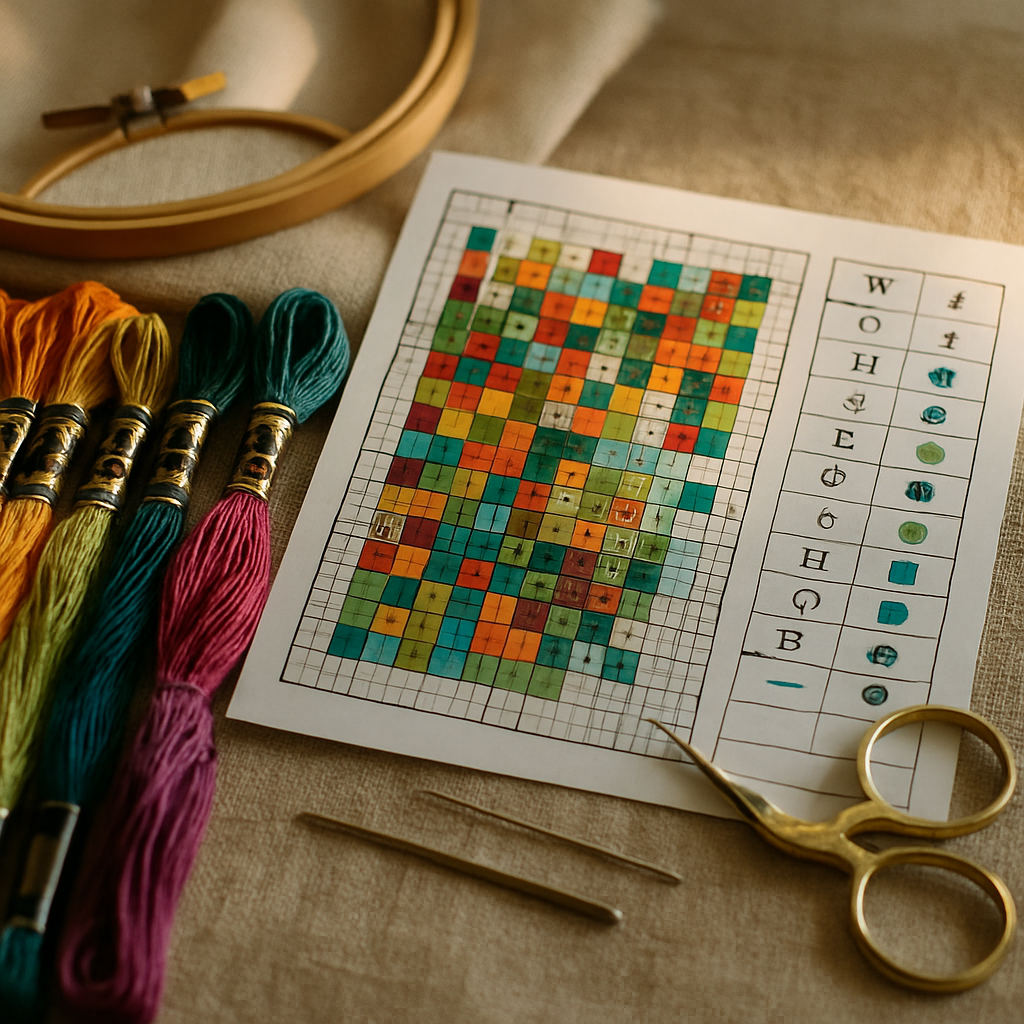
Uno schema punto croce è un linguaggio scritto. Ogni X, punto, barra e linea è una parola, e la legenda è il dizionario. Una volta che riesci a leggerlo tutto — non solo i simboli evidenti dei punti pieni, ma anche i frazionari, le linee del punto indietro, i nodi francesi, le notazioni dei blend nascoste nella legenda — nessuno schema potrà più intimidirti.
Questa è la guida da tenere aperta in una scheda del browser. Cataloghiamo ogni simbolo e notazione che potrai incontrare, cosa significa e come comportarti. Se sei alle prime armi e vuoi prima il manuale "come si ricama davvero questo", inizia con la nostra guida al punto croce per principianti e torna qui quando incontri un simbolo che non riconosci. Questa pagina è il riferimento.
Come funziona la notazione del punto croce (la versione da 30 secondi)
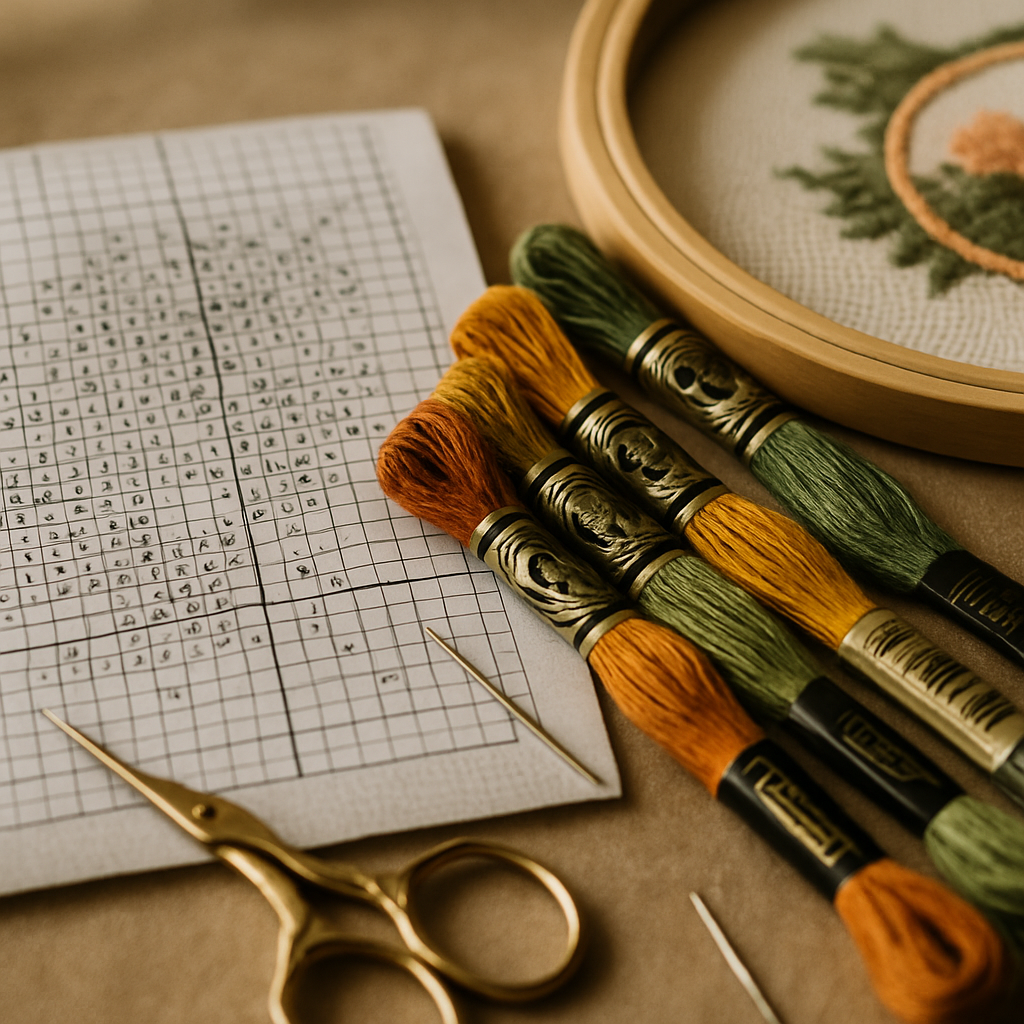 Tre elementi portano tutto il significato in uno schema:
- Il simbolo all'interno (o sopra) un quadretto ti dice quale colore di filo va in quel quadretto di tela e talvolta quale tipo di punto.
- La legenda associa ogni simbolo a un filo specifico — marca, numero e spesso un nome e un campione colore.
- Linee, segni e simboli speciali aggiungono gli extra: contorni, punti parziali, nodi, perline.
Padroneggia questi tre livelli e avrai padroneggiato il linguaggio. Affrontiamoli uno alla volta, partendo dai simboli stessi.
I due stili di schema: simboli vs blocchi di colore
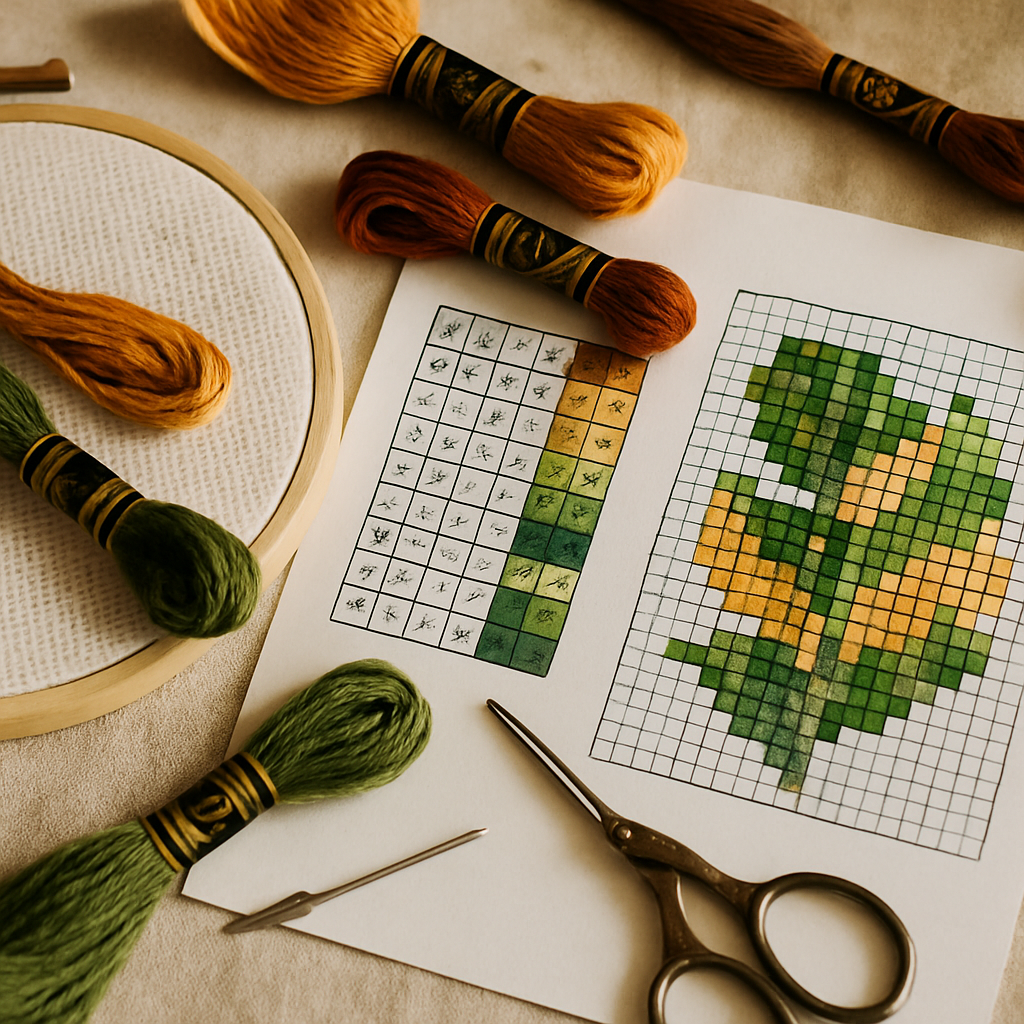 Prima del catalogo, è importante sapere quale tipo di schema hai in mano, perché cambia l'aspetto dei simboli.
- Schemi a simboli sono in bianco e nero. Ogni colore è un simbolo astratto (X, ●, ▲, ★, e così via). Comodi da stampare, facili da leggere in poca luce ed eccellenti per tenere distinti i colori simili — DMC 813 e DMC 826 sono quasi lo stesso blu, ma una stella e un cerchio non si confondono mai.
- Schemi a blocchi di colore stampano ogni quadretto nel colore approssimativo del filo. Facile vedere l'immagine a colpo d'occhio, più difficile distinguere le sfumature sottili.
- Schemi simbolo-su-colore combinano entrambi: un quadretto colorato con il simbolo sovrapposto. È l'impostazione predefinita moderna per gli schemi digitali e la più infallibile — ottieni sia l'immagine a colpo d'occhio sia il simbolo inequivocabile.
Non esiste uno stile universalmente "migliore"; la nostra guida per principianti li mette a confronto in dettaglio. Ciò che conta per questa guida: il significato dei simboli qui sotto è lo stesso indipendentemente dallo stile.
Simboli del punto croce pieno (la maggior parte di ogni schema)
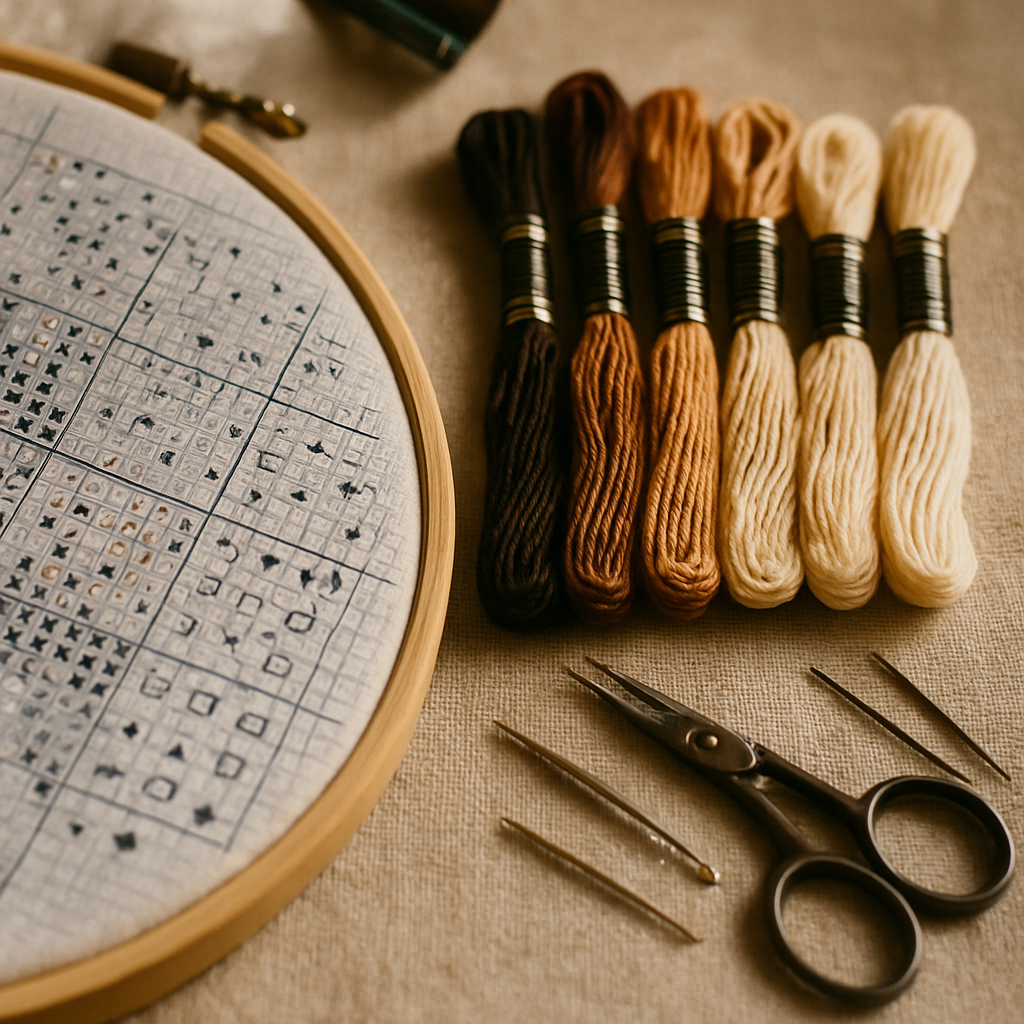 La grande maggioranza dei quadretti in uno schema sono punti croce pieni — una X completa che riempie un quadretto di tela. In uno schema a simboli, a ogni colore è assegnato un segno unico. Non esiste uno standard del settore fisso su quale simbolo significhi quale colore; l'assegnazione è arbitraria e definita dalla legenda di quello schema. I simboli comuni per i punti pieni includono:
| Tipo di simbolo | Esempi |
|---|---|
| Lettere | A, B, C, X, Z, lettere minuscole a, b, c |
| Geometrici | ● ○ ■ □ ▲ △ ◆ ◇ ★ ☆ |
| Barre e trattini | / \ |
| Simboli matematici e punteggiatura | % & @ # ? ! ~ |
L'unica regola: ogni colore distinto riceve un simbolo distinto, e la legenda ti dice quale è quale. Uno schema ben progettato sceglie simboli facili da distinguere, con simboli più densi/scuri per i colori più scuri, così che lo schema rifletta visivamente il lavoro finito. Uno schema mal progettato riutilizza simboli quasi identici per colori adiacenti — una delle cause più silenziose degli errori di ricamo (vedi più avanti).
Notazione dei punti frazionati
I punti frazionati occupano solo una parte di un quadretto. I designer li usano per rendere curve e dettagli che i punti pieni non possono. Sono la notazione più frequentemente letta male, quindi impara questi quattro a memoria.
| Punto | Cos'è | Simbolo tipico nello schema |
|---|---|---|
| Quarto di punto | Un braccio diagonale che arriva al centro — riempie un angolo | Simbolo spinto in un angolo del quadretto, o un triangolo/cuneo |
| Mezzo punto | Una sola diagonale (una delle due gambe della X) | Una singola barra / o \ |
| Tre quarti di punto | Un mezzo punto + un quarto di punto (una X piena con un braccio mancante) | Un triangolo che riempie metà del quadretto, spesso con il simbolo del colore |
| Punto petite (croce su un filo) | Una croce piena ricamata in un quarto del quadretto (sopra un filo di tela aida) | Un piccolo simbolo in un angolo, indicato nella legenda come "petite" o "petit" |
La posizione del simbolo all'interno del quadretto di solito ti dice quale angolo o quale diagonale occupa il punto parziale. Uno schema che usa frazionari include sempre una nota dedicata nella legenda che spiega la sua convenzione — leggila prima di iniziare, perché le convenzioni variano da designer a designer.
Frazionari, riflessione realistica L'uso intensivo di frazionari è il segno distintivo degli schemi dettagliati in stile ritratto — e un fattore importante di difficoltà. Se uno schema "per principianti" è pieno di tre quarti di punto da cima a fondo, è stato etichettato male. Per capire perché gli schemi ricchi di dettaglio sono così punitivi, leggi perché alcuni schemi sono frustranti da ricamare.
Notazione del punto indietro e dei contorni
Il punto indietro è disegnato come linee colorate continue, non simboli nei quadretti, perché corre lungo le linee della griglia (o diagonalmente attraverso un quadretto) invece di riempire un quadretto. È il lavoro di contorno — il bordo di una foglia, la curva di una lettera, la definizione attorno a un viso — e viene aggiunto sopra dopo aver completato i punti croce.
Come leggerlo:
- Una linea che traccia il bordo di un quadretto = un punto indietro dritto lungo quel bordo del quadretto di tela.
- Una linea che attraversa un quadretto diagonalmente = un punto indietro diagonale.
- Una linea lunga sullo schema = una serie di brevi punti indietro singoli uno dopo l'altro, non un unico punto gigante.
- La legenda specifica il colore e il numero di capi del punto indietro, ad esempio "Punto indietro: DMC 310, 1 capo."
Notazioni di linea correlate che potresti vedere:
- Punto lungo / punto dritto — un singolo punto dritto più lungo di un punto indietro, usato per cose come baffi o fili d'erba. Disegnato come una singola linea, indicato nella legenda.
- Couching — un filo posato fissato giù, raro al di fuori dei lavori specialistici, sempre spiegato in una nota dedicata della legenda.
Nodi francesi, perline e notazione a puntini
I piccoli accenti in rilievo hanno simboli propri, di solito circolari o a punto, sempre chiariti nella legenda:
- Nodo francese — una piccola sporgenza in rilievo per occhi, centri di fiori, puntini sulle "i". Contrassegnato con un punto pieno
●o un piccolo cerchio vuoto, etichettato "nodo francese" nella legenda. Spesso assegnato a un colore e numero di capi propri. - Nodo coloniale — una variante di nodo più robusta; stesso simbolo a punto, etichettato di conseguenza.
- Perline — vere e proprie perline cucite invece di essere ricamate. Contrassegnate con un cerchio o un simbolo a forma di perlina e una marca/numero di perlina (ad es. Mill Hill) nella legenda invece di un numero di filo.
- Paillettes / charm / bottoni — abbellimenti indicati con un simbolo unico e una nota di posizionamento.
La trappola: un puntino di nodo francese e un cerchio di punto pieno possono sembrare simili a colpo d'occhio. Verifica sempre nella legenda se un simbolo circolare è un punto o un nodo — si lavorano in modo completamente diverso.
Notazione per punti speciali e decorativi
I sampler e i lavori decorativi vanno oltre il punto croce per arrivare al ricamo di superficie. Questi appaiono con simboli unici e una sezione dedicata della legenda che deve essere letta per prima:
- Punto raso — blocchi di punti dritti paralleli che riempiono una forma.
- Lazy daisy (catenella staccata) — punti a petalo ad anello, comuni nei motivi floreali.
- Spina di pesce, chevron, occhio algerino, punto Rhodes — punti speciali geometrici nei sampler a fasce.
- Smyrna / doppia croce — un punto croce con una croce dritta sovrapposta, contrassegnato con un simbolo distintivo a forma di stella.
Se vedi un simbolo che non è nella legenda principale dei colori, è un punto speciale — cercane la definizione in una chiave separata. Non tirare a indovinare; leggere male un punto Rhodes come una croce piena significa disfare il lavoro.
Leggere la legenda: come i simboli si associano al filo
La legenda (chiamata anche chiave o lista fili) è il punto in cui i simboli diventano filo. Una riga di legenda completa contiene:
- Il simbolo esattamente come appare nello schema
- La marca + numero colore (ad es.
DMC 321,Anchor 9046) - Il nome del colore (ad es. "Christmas Red")
- Spesso un campione colore
- Spesso il numero di matassine che ti serviranno
Alcune notazioni vivono all'interno della legenda invece che sullo schema:
- Numero di capi — a volte per colore (
DMC 310 / 2 capi), più spesso indicato una volta sola nell'intestazione per tutto lo schema. - Notazione di blend — due fili combinati nell'ago per una tonalità intermedia, scritto come
DMC 712 + DMC 822 (1+1). Lo schema mostra un solo simbolo; la legenda rivela che è un blend. - Filo sfumato / overdyed — fili che cambiano colore lungo la loro lunghezza (le "Color Variations" DMC, marche overdyed). Indicati dal loro intervallo di numeri speciale e talvolta da un'etichetta "sfumato".
- Filo light effects / metallizzato — DMC Light Effects (numeri E) e metallizzati, segnalati nella legenda perché si gestiscono diversamente durante il ricamo.
Se la marca del tuo schema non corrisponde alla tua scorta, dovrai convertire i numeri — e non tutte le conversioni sono esatte. La nostra guida DMC vs Anchor copre le conversioni comuni e le famiglie di colori dove una sostituzione si nota in modo evidente. La colonna del numero di matassine si collega a quanto filo comprare; la nostra prossima guida sulla quantità di filo affronta i calcoli nel dettaglio.
Griglia, centro e segni di conteggio
Non ogni segno su uno schema è un punto. Il livello di navigazione:
- Griglia fine — un quadretto = un punto.
- Griglia in grassetto (ogni 10 quadretti) — il tuo aiuto al conteggio. Conta a decine, mai a uno a uno. È la singola funzionalità più utile della pagina.
- Frecce / triangoli del centro — segni sui bordi esterni che puntano alla riga e alla colonna centrale del disegno. Dove si incrociano è il punto di partenza convenzionale.
- Indicatori di sovrapposizione delle pagine — sugli schemi stampati su più pagine, bande grigie o righe ripetute mostrano dove le pagine si collegano. Attraversare un cambio di pagina a occhio è il punto in cui avvengono la maggior parte degli errori di conteggio — incolla le pagine insieme o lavora da un'unica immagine combinata.
Una guida rapida da salvare nei preferiti
| Se vedi… | Significa… | Fai… |
|---|---|---|
| Un simbolo che riempie un intero quadretto | Punto croce pieno in quel colore | Una X completa |
Una singola barra / o \ | Mezzo punto | Una diagonale |
| Un simbolo in un angolo | Quarto di punto o petit point | Punto parziale in quell'angolo |
| Un triangolo che riempie metà quadretto | Tre quarti di punto | Mezzo + quarto combinati |
| Una linea colorata piena | Punto indietro / contorno | Serie di brevi punti dritti lungo la linea |
| Un puntino pieno etichettato "nodo" | Nodo francese/coloniale | Nodo avvolto, non un punto |
| Un cerchio etichettato con un codice perlina | Perlina | Cuci la perlina |
Due numeri di filo con (1+1) | Blend | Combina entrambi i fili nell'ago |
| Un simbolo non presente nella legenda colori | Punto speciale | Cerca prima la sua chiave dedicata |
| Linea in grassetto ogni 10 quadretti | Griglia di conteggio | Conta a decine |
| Freccia / triangolo sul bordo | Indicatore del centro | Inizia dove le frecce si incrociano |
Salva uno screenshot di questa tabella. Risponde al 90% dei momenti "aspetta, cos'è questo simbolo?".
Perché un buon design dei simboli conta più di quanto pensi
Ecco la parte che la maggior parte delle guide sui simboli non menziona mai: due schemi della stessa immagine possono essere ugualmente "corretti" ma incredibilmente diversi da ricamare, puramente in base a come sono organizzati i loro simboli e colori.
Le modalità di fallimento sono ricorrenti:
- Simboli simili per colori adiacenti — due rosa simili assegnati a due cerchi simili. Il tuo occhio li confonde a metà riga e ricami la tonalità sbagliata.
- Legende ordinate per forma del simbolo invece che per valore di colore — non riesci a trovare la tonalità successiva in un gradiente perché l'ordine della legenda contrasta con la logica dello schema.
- Confetti — distese di punti singoli isolati che richiedono ciascuno una consultazione del simbolo. Tecnicamente accurato, praticamente estenuante. (La nostra prossima guida di sopravvivenza ai confetti è costruita esattamente per questi schemi.)
È qui che la generazione di uno schema conta tanto quanto i suoi simboli. Uno schema costruito con leggerezza ti seppellisce sotto simboli simili e confetti; uno schema costruito bene spende dettaglio dove l'occhio guarda e mantiene il set di simboli pulito e distinto.
È anche qui che StitchThis fa silenziosamente il lavoro noioso ma critico per te. Quando trasformi una foto in uno schema, ottieni una legenda con marca abbinata (DMC, Anchor, Cosmo, Gamma, Madeira o Metro), un'assegnazione pulita dei simboli che mantiene visivamente distinti i colori simili, e StitchSense che mantiene nitido il dettaglio sul soggetto focale calmando le aree affollate — il che significa meno puntini di confetti che richiedono simboli propri fin da subito. Lo schema è fedele alla tua foto; gli strumenti aiutano solo a rifinire l'immagine sorgente, mai i punti. E lo esporta in un PDF pulito con la legenda impostata nel modo in cui un ricamatore la legge davvero.
Perché conta quando crei il tuo schema Una foto passata attraverso un convertitore approssimativo può produrre uno schema con 80 colori e una tempesta di punti singoli — tecnicamente uno schema valido, praticamente irricamabile. Su StitchThis puoi costruire uno schema pulito e leggibile gratis — con un numero sensato di colori, simboli distinti e una legenda che puoi davvero seguire. Prova StitchThis gratis →
Domande frequenti
Esiste un set standard di simboli del punto croce? No. L'assegnazione simbolo-colore è arbitraria e definita dalla legenda di ogni schema. Le categorie sono standard (punto pieno, frazionario, punto indietro, nodo, perlina), ma quale simbolo specifico significhi quale colore cambia da schema a schema. Leggi sempre la legenda — non dare mai per scontato che una X significhi lo stesso colore in due schemi.
Che aspetto ha un punto indietro su uno schema? Una linea colorata piena che corre lungo o attraverso la griglia, invece di un simbolo dentro un quadretto. Le linee lunghe sono fatte di più punti brevi uno dopo l'altro. La legenda elenca separatamente il colore e il numero di capi del punto indietro.
Come faccio a distinguere un nodo francese da un punto normale? Dalla legenda. Entrambi possono usare simboli circolari, ma un nodo francese è etichettato "nodo" (o "nodo francese") nella legenda e si lavora come un nodo avvolto, non come un punto croce. Nel dubbio, controlla la legenda prima di ricamare un simbolo circolare.
Cosa significa DMC 712 + DMC 822 (1+1)?
È un blend: combina un capo di DMC 712 e un capo di DMC 822 nell'ago per creare una tonalità intermedia. Lo schema mostra un solo simbolo; la legenda rivela che sono due fili miscelati.
Perché due colori simili hanno simboli così simili nel mio schema? Cattivo design dei simboli. Gli schemi ben fatti assegnano simboli visivamente distinti a colori adiacenti proprio perché tu non li confonda. Se il tuo schema non lo fa, segna i due colori con evidenziatori diversi su una copia stampata. Gli strumenti che generano automaticamente schemi con set di simboli puliti e distinti evitano questo problema fin dall'inizio.
A cosa servono le linee in grassetto ogni dieci quadretti? Al conteggio. Dividono lo schema in blocchi 10×10 così puoi contare a decine invece che a uno a uno — molto meno soggetto a errori. Sono navigazione, non punti.
Posso scegliere la marca di filo a cui i simboli del mio schema si associano? Con uno schema stampato, no — è fissata su quella che ha usato il designer. Se generi il tuo schema, puoi. StitchThis ti permette di scegliere la marca (DMC, Anchor, Cosmo, Gamma, Madeira, Metro) così la legenda corrisponde al filo che già possiedi.
Lo schema, completamente decodificato
La notazione del punto croce sembra un codice segreto finché non capisci che sta facendo sempre e solo tre cose: nominare un colore, nominare un tipo di punto e indicarti il centro. I punti pieni riempiono i quadretti, i frazionari riempiono gli angoli, le linee sono contorni, i puntini sono nodi, e la legenda collega ogni segno a un filo reale. Tieni la tabella di riferimento rapido qui sopra a portata di mano e non esisterà schema che non saprai leggere.
E quando preferisci creare uno schema pulito invece di decodificarne uno disordinato, puoi costruire uno schema su StitchThis gratis — simboli distinti, una legenda con marca abbinata che puoi davvero seguire, un tracker punti integrato e un'esportazione PDF pulita. StitchThis copre l'intero flusso di lavoro — creazione di schemi dalla tua foto, tracciamento dei fili multi-marca, il visualizzatore nel browser che funziona anche da editor di schema, e una comunità di ricamatori che ti tiene compagnia. Prova StitchThis gratis →
Il flusso di lavoro completo di StitchThis
Qualsiasi cosa tu stia creando — un lavoro per principianti, un ritratto commemorativo, un regalo, uno schema da vendere — la pipeline di StitchThis è sempre lo stesso insieme di componenti che lavorano insieme, e ciascuno è costruito attorno a quegli attriti che mandano in crisi altri strumenti.
- Conversione foto-a-schema con StitchSense mantiene il dettaglio dove l'occhio si posa (volti, occhi, soggetti focali) e semplifica ciò che sta dietro, così il lavoro finito assomiglia al soggetto invece che a una macchia di confetti.
- Sei marche di filo nella legenda — DMC, Anchor, Cosmo, Gamma, Madeira, Metro — così lo schema arriva nella marca che possiedi davvero.
- Gestore della scorta di filati con caricamento CSV (da un foglio di calcolo esistente) o caricamento foto (scatta una foto al tuo organizer di matassine per importarle in pochi secondi, senza inserimento manuale dei dati).
- Visualizzatore nel browser che funziona anche da editor di schema — tocca ogni punto per tracciare i progressi, dipingi o riempi nuovi punti con gli strumenti di disegno, cambia tutte le istanze di un colore in un altro, modifica punti frazionari e punto indietro.
- Designer a mano libera per disegnare schemi da zero o aggiungere nomi, date e tocchi personali a uno schema generato.
- Generazione batch FORGE su piano Studio per i designer che producono più varianti da una singola sorgente.
- Esportazione PDF pulita pronta da stampare, condividere o vendere.
- L'intero flusso di lavoro in un unico posto — creazione di schemi, tracciamento dei fili, il visualizzatore nel browser con editor di schema, e una comunità di ricamatori che si incoraggiano a vicenda.
Prova StitchThis gratis — il flusso di lavoro è costruito attorno ai piccoli attriti che uccidono altri strumenti, così puoi passare il tempo a ricamare invece di combattere con il tuo software.
Letture correlate su StitchThis:
Ready to turn your photo into a cross-stitch pattern?
Try StitchThis freeTwo patterns per month. No card required.