Cross-Stitch Pattern Watermarking and Licensing: Protecting Your Designs
How to protect your cross-stitch patterns from theft — practical watermarking that doesn't ruin usability, clear licensing terms, and the finished-object question.
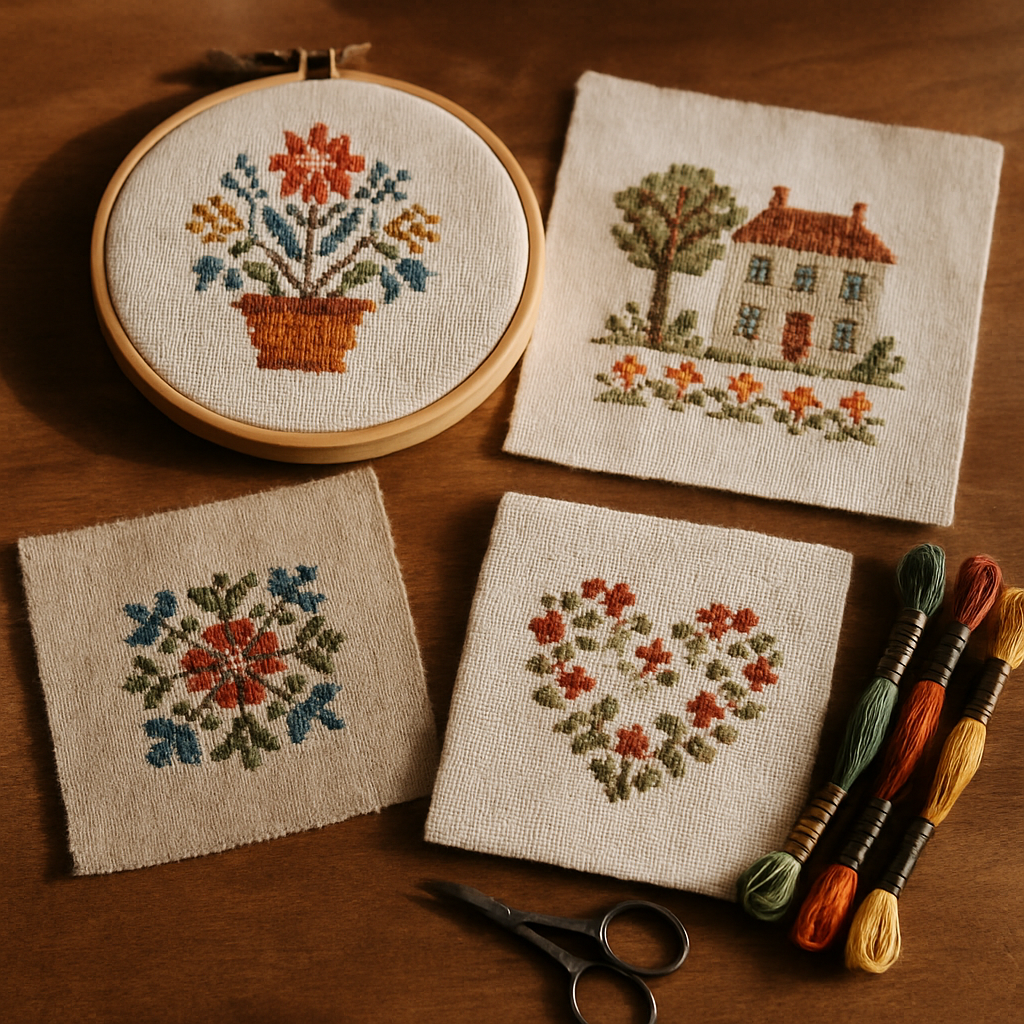
Spend weeks building a pattern catalog and you'll eventually face the uncomfortable side of selling digital goods: a PDF is infinitely copyable. Someone buys your chart, drops it in a Facebook group "to share," or — worse — relists it as their own. It stings, and it costs real money.
You can't make a digital pattern uncopyable. Anyone who promises you that is selling snake oil. What you can do is make theft inconvenient, make ownership clear, and set terms that protect you when something does go wrong. That's the realistic goal, and this guide covers the three parts of it: watermarking that deters without ruining the pattern, licensing that defines what buyers may and may not do, and the genuinely murky questions — like finished-object resale — that every designer eventually has to answer.
One thing up front, said plainly: this is general guidance from a design perspective, not legal advice. Copyright law varies by country and situation, so for anything high-stakes, talk to a professional who knows your jurisdiction. With that said — if you're building a catalog to sell, you can try StitchThis free and bake these practices into your process from the start.
Watermarking: deter, don't destroy
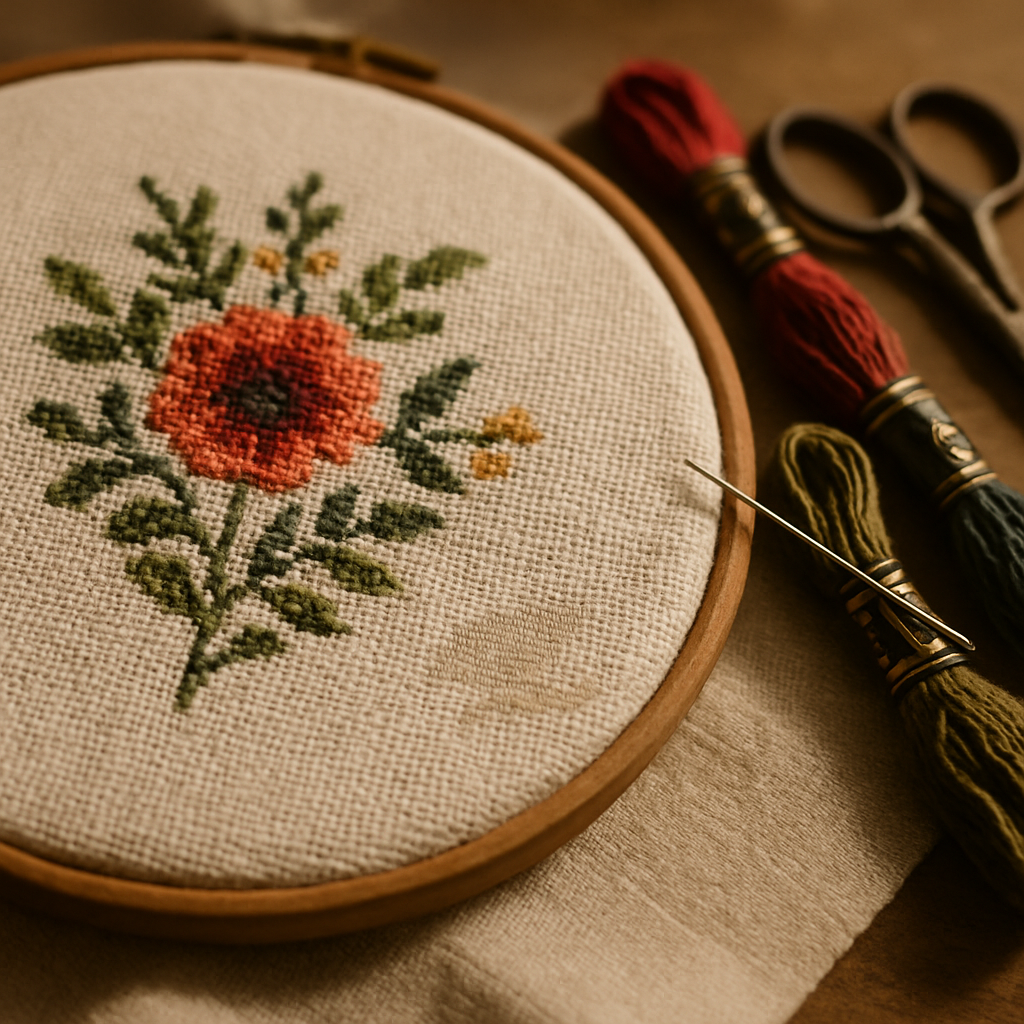 A watermark's job is to make casual theft and redistribution annoying enough that most people don't bother — while keeping the pattern perfectly usable for the customer who paid. Those two goals pull against each other, so the placement matters more than the watermark itself.
Watermark the preview hard, the working chart lightly
- Listing/preview images: watermark boldly. The images you post publicly on Etsy, Instagram, or Pinterest should carry an obvious watermark — your shop name across the chart, a reduced resolution, or only a partial view. These are the images thieves grab first, so protect them aggressively. The buyer never stitches from these.
- The delivered chart: keep it clean and usable. A working chart plastered with a giant diagonal watermark is miserable to stitch from and generates refund requests. Use a restrained mark here — a copyright line and your shop name in the page footer, not a stamp over the symbols.
Put your name on every page
The simplest, most effective deterrent is a consistent footer on every page of the PDF: © [Year] [Your Shop Name] — for personal use, not for resale or redistribution. It does three things at once: asserts your ownership, states the license in miniature, and makes a stolen copy traceable back to you. It's quiet, it doesn't hurt usability, and it's on every single page.
Consider buyer-specific marks for premium work
For high-value or custom work, some designers stamp each delivered PDF with the buyer's name or order number. The logic is simple: a file that says "Licensed to Jane Smith, order #1043" is far less likely to be shared, because the sharer is identifiable. It's more effort per order, so reserve it for commissions and premium patterns rather than $4 charts. (It pairs naturally with custom commission work.)
Be realistic
Watermarks deter the casual and the lazy — which is most theft. They won't stop a determined copier, and that's fine. The goal isn't an impenetrable vault; it's raising the friction enough that your honest customers stay honest and your work is traceable when it isn't.
Licensing: define what buyers can do
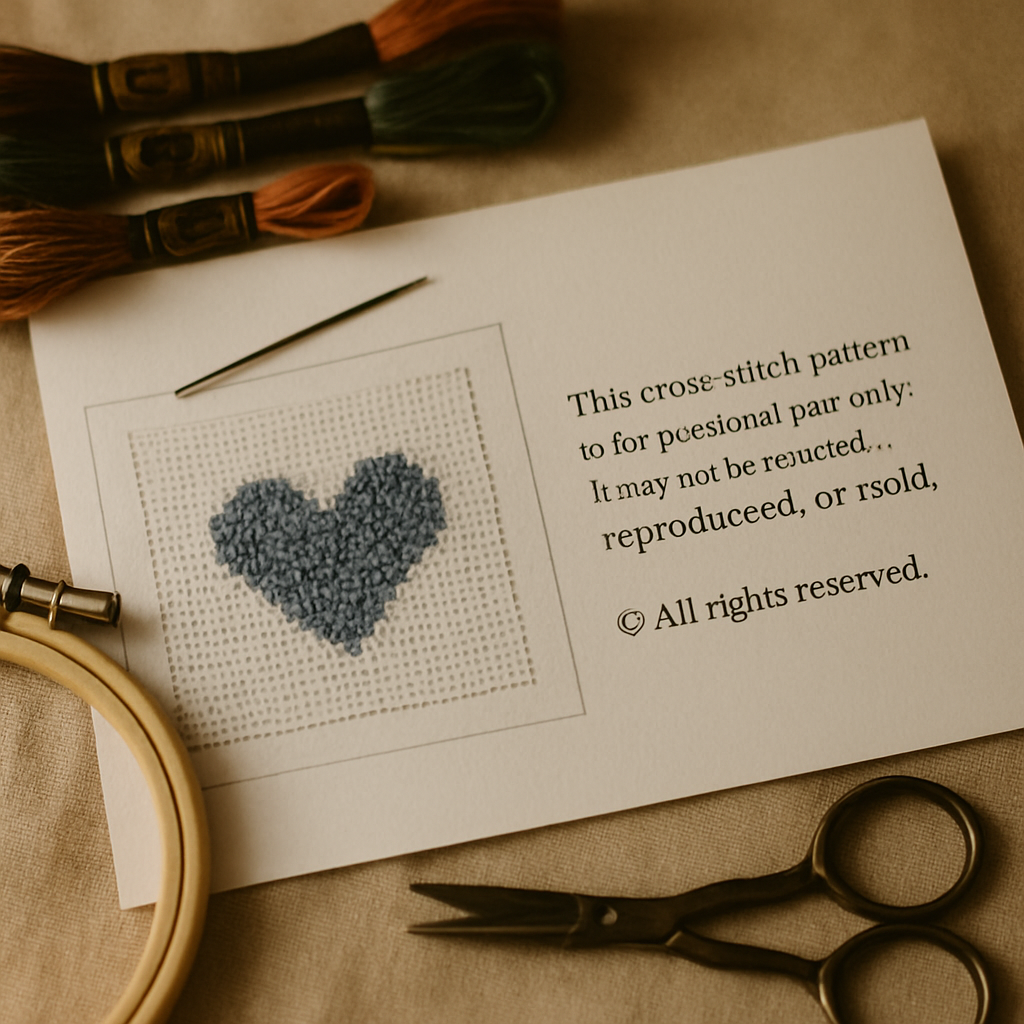 Watermarking discourages theft; licensing defines the rules. Even a short, clear license statement included with every pattern sets expectations and gives you something to point to when there's a dispute.
You own the copyright — automatically, but with limits
In most places, an original creative work is protected by copyright the moment you create it; you don't have to register anything for the basic right to exist (though registration can strengthen enforcement — a jurisdiction-specific question for a professional). Two practical limits worth understanding:
- Selling a pattern doesn't transfer your copyright. A buyer purchases a license to use the pattern, not ownership of the design. Your terms define that license.
- You can't copyright the craft itself — stitches, techniques, or the general idea of, say, "a cross-stitch fox." What's protectable is your specific original chart and its creative expression.
Write a license buyers can actually understand
Skip the dense legalese for a plain-language Terms of Use, included in the PDF and your shop policies. Most cross-stitch licenses address:
- Personal use. The buyer may stitch the pattern for themselves and as gifts.
- No redistribution. They may not share, resell, or post the pattern file. One purchase, one user.
- No reselling the pattern as their own. Obvious, but state it.
- Finished-object policy. Whether buyers may sell physical items they stitch from your pattern — covered below, because it's the contested one.
The finished-object question
Here's the one that starts arguments. Can a customer sell a finished piece they stitched from your pattern? The honest answer is that it's legally murky and varies by jurisdiction — and because it's unsettled, the practical move is to state your policy explicitly rather than leave it to assumption. Designers land in different places:
- Some allow finished-object sales (often with credit, or capped at small/handmade quantities) — generous, community-friendly, and good for goodwill.
- Some prohibit it outright.
- Many permit small-scale handmade sales but forbid mass production.
There's no universally "correct" choice — it's a business decision about your brand and your audience. Whatever you choose, write it down clearly so buyers know before they stitch.
Patterns made from photos: mind the source
A licensing wrinkle specific to photo-based patterns: if a pattern is made from a copyrighted image — a celebrity photo, licensed character art, someone else's photograph — you may not have the right to sell it, no matter how original your charting is. For commission work from client photos, make sure the client has the rights to the photo they send, and consider a line in your intake confirming it. Charting your own photos sidesteps the issue entirely.
Where StitchThis fits
Protection starts with a professional, properly branded deliverable and clear permission to sell — and that's the designer-support side StitchThis covers:
- A clean, professional PDF. StitchThis exports a clean pattern PDF — the kind of polished, well-laid-out document where a footer copyright line and your shop branding look intentional rather than tacked on. (Our PDF best practices guide covers building that document.)
- A commercial license to sell what you make. StitchThis Studio includes a commercial license, so your right to sell the patterns you produce is on solid footing from the start — the foundation everything above is built on.
- Chart your own source photos. Because StitchThis turns your photos into faithful patterns, you can build a catalog from images you own outright, sidestepping the thorniest source-licensing problems.
The designer-support pipeline: produce a faithful pattern from your own photo, export a clean, brandable PDF you can footer with your copyright, and sell it under a Studio commercial license — a professional foundation for protecting and selling your work. Start free →
To be clear and honest: a watermark and a license deter and define — they don't enforce themselves. They're the practical, sensible layer of protection that fits how digital patterns actually work.
A quick protection checklist
- Bold watermark on all public preview images
- Restrained copyright footer on every page of the delivered PDF
- Plain-language Terms of Use included in the file and shop policies
- Explicit finished-object policy (allowed? small-scale? prohibited?)
- Buyer-specific marks on premium/commission PDFs (optional)
- Source-image rights confirmed for any photo-based pattern
- A commercial license covering your own right to sell
Frequently asked questions
Can I stop people from copying my cross-stitch patterns? Not completely — any digital file can be copied. The realistic goal is to deter casual theft with watermarks, make ownership traceable with a copyright footer, and define the rules with a clear license.
Do I need to register a copyright on my patterns? In most places an original work is protected by copyright automatically when you create it. Registration can strengthen your ability to enforce that right, but the specifics vary by country — ask a professional for your situation.
Can my customers sell items they stitch from my pattern? It's a legally murky, jurisdiction-dependent question, so designers set their own policy. Some allow small-scale handmade sales, some prohibit resale entirely. The key is to state your finished-object policy clearly in your terms.
How should I watermark a pattern without ruining it? Watermark public preview images boldly, but keep the delivered working chart clean — a simple copyright footer on each page rather than a stamp over the symbols, so paying customers can actually stitch from it.
Can I sell a pattern I made from any photo? Only if you have the rights to the source image. Patterns made from copyrighted photos can't necessarily be sold even if your charting is original. Charting your own photos avoids the problem.
Does StitchThis let me sell the patterns I make? Yes — StitchThis Studio includes a commercial license covering your right to sell what you produce, and exports a clean, brandable PDF you can add your copyright line to.
Protect the catalog you're building
You can't lock a digital pattern in a vault, but you don't need to. Watermark your previews, footer your PDFs, write a license your buyers understand, and decide your finished-object policy on purpose. Do that, and you've protected your work about as well as digital reality allows — while keeping your honest customers happy.
Try StitchThis free to build a catalog on a clean, professional, commercially-licensed foundation.
Why StitchThis fits a designer workflow
The bottlenecks that slow down a serious designer aren't the cross-stitches themselves — they're the support pipeline around them. StitchThis is built to compress that pipeline. Photo-to-pattern conversion turns your source images into faithful charts, with StitchSense keeping detail where the eye lands and simplifying what's behind it, so portrait work doesn't dissolve into confetti. Studio-tier FORGE batch generation spins out several palette and treatment variations from a single source so you can pick the best version rather than committing to the first chart. The in-browser viewer doubles as a chart editor — paint, fill, change-all, half-stitch and backstitch tools — so post-generation cleanup happens in the same place as generation, not in a separate desktop app.
For the output side: every pattern exports as a clean PDF ready for branding and selling, with the legend rendered in any of six floss brands (DMC, Anchor, Cosmo, Gamma, Madeira, Metro) for buyer accessibility. The Studio commercial licence covers your right to sell what you produce. The floss stash tracker — populated by CSV upload or by photographing your skein organiser — keeps your own stash inventory accurate as you stitch test pieces, so test-stitching the patterns you sell doesn't ambush your floss budget. The free tier lets you run the full pipeline before committing; Studio adds FORGE and commercial licensing when you're ready to scale.
Try StitchThis free — the foundation a serious designer catalogue is built on.
Related reading on StitchThis:
Ready to turn your photo into a cross-stitch pattern?
Try StitchThis freeTwo patterns per month. No card required.