How to Sell Pet Portrait Cross-Stitch Commissions (A Designer's Playbook)
Turn pet photos into a real commission business. How to intake client photos, produce faithful patterns fast with StitchSense and FORGE, price your work, and deliver.
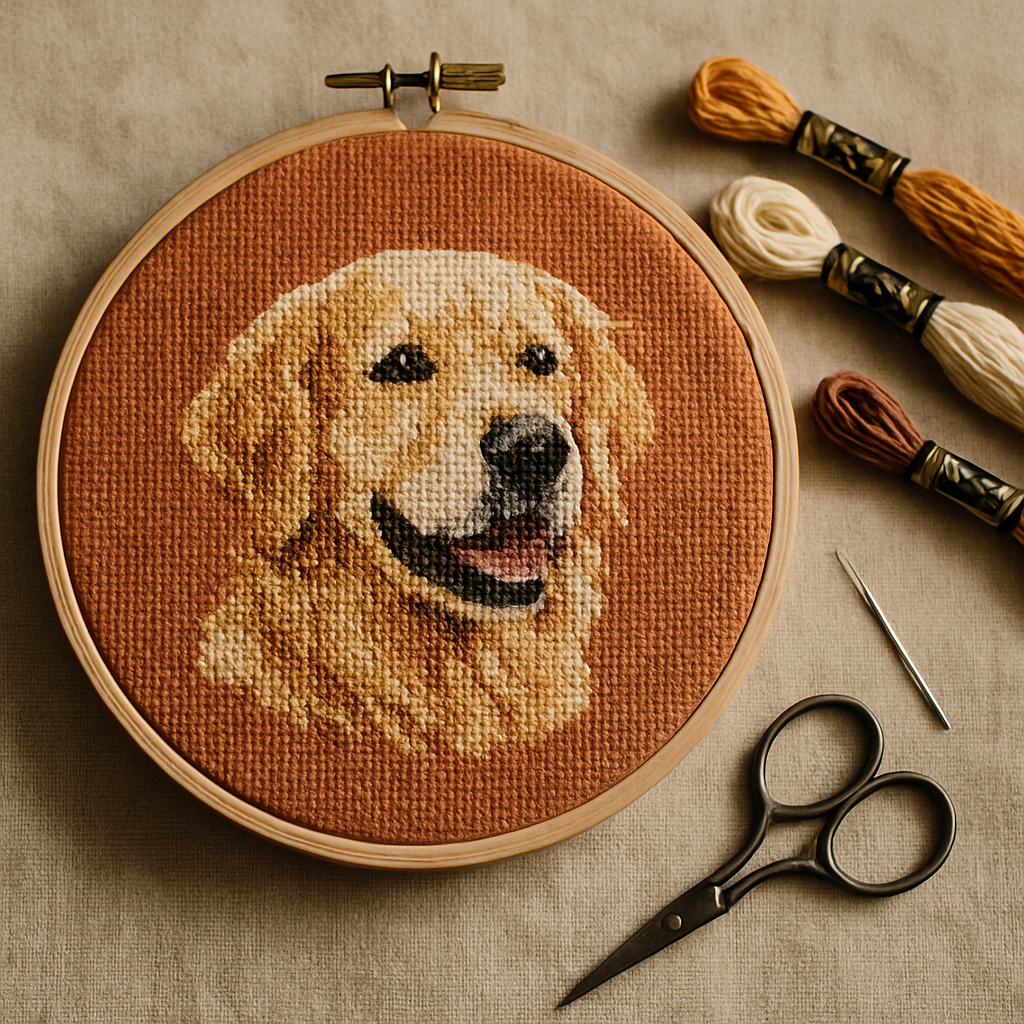
Pet portraits are the closest thing cross stitch has to a guaranteed market. People will hesitate over a $30 floral sampler and then, without blinking, commission a custom piece of their dog — because it isn't decor to them, it's Bailey. The emotional pull is real, the audience is enormous, and a happy client almost always comes back for the other pets (and tells the dog-park group chat about you).
The part nobody warns you about is that running it as a business is a different skill from stitching. The bottleneck isn't your needle — it's turning a stranger's slightly blurry phone photo into a faithful, professional, consistent pattern, over and over, fast enough that the math works. Get that production pipeline right and commissions become a real income stream. Get it wrong and you're spending six unpaid hours hand-charting fur.
This is the playbook for the production side: how to take in client photos, produce patterns that actually look like the pet, price the work, and deliver something clients are thrilled to receive. We'll lean on StitchThis because it collapses that whole pipeline into one place — you can try it free before you take your first order.
Why pet portraits are the commission niche worth owning
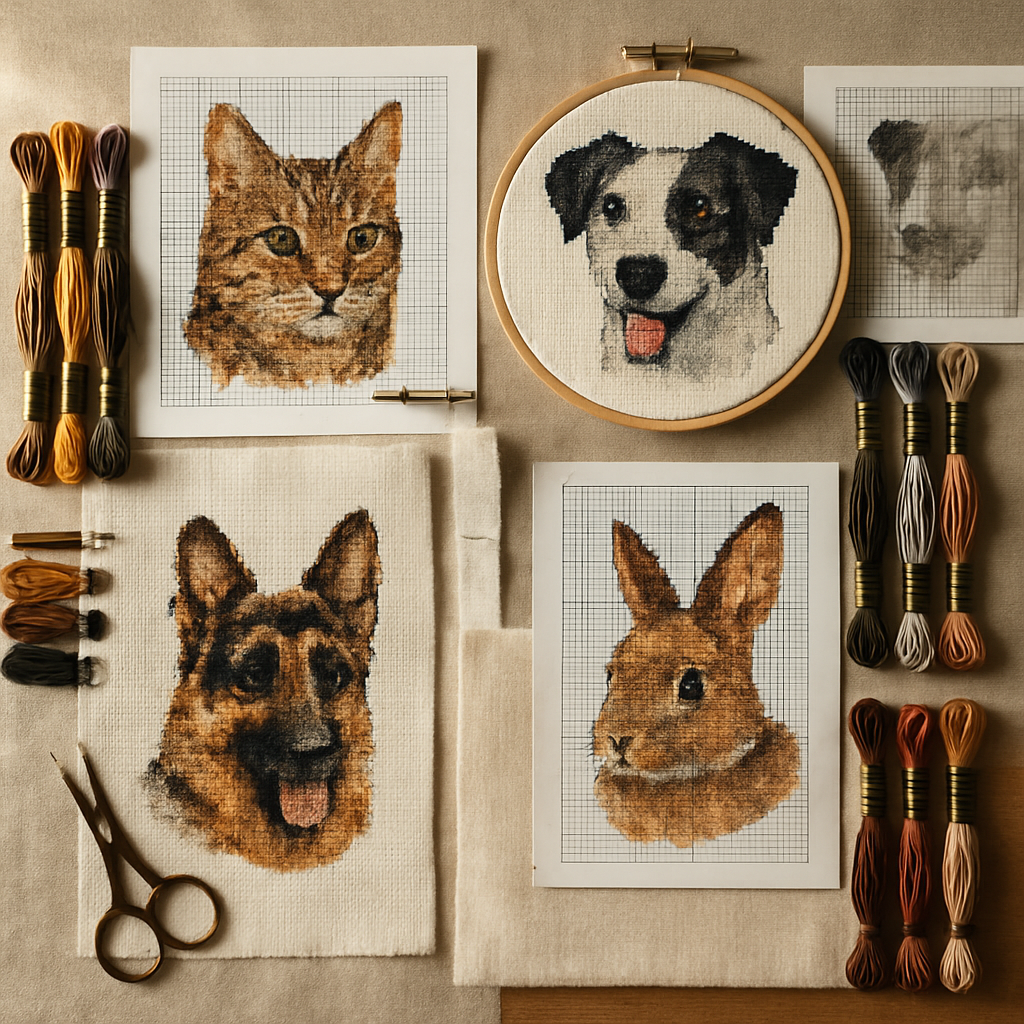 A few reasons this niche outperforms almost everything else a cross-stitch designer can sell:
- Emotion overrides price sensitivity. A custom pet piece is a gift people want to spend on.
- Built-in repeat business. Multi-pet households, the next pet, friends' pets, memorials.
- It's personal, so it can't be commoditized. Nobody can undercut you on "this exact dog." Generic charts compete on price; commissions compete on quality and likeness.
- Memorial work matters deeply. A meaningful share of commissions are for pets who've passed. Handle those with care and you earn a client for life. (Our pet memorial guide covers that tone.)
The opportunity is clear. The question is whether you can produce at a quality and speed that turns it into a business.
The real bottleneck: faithful patterns, fast and consistent
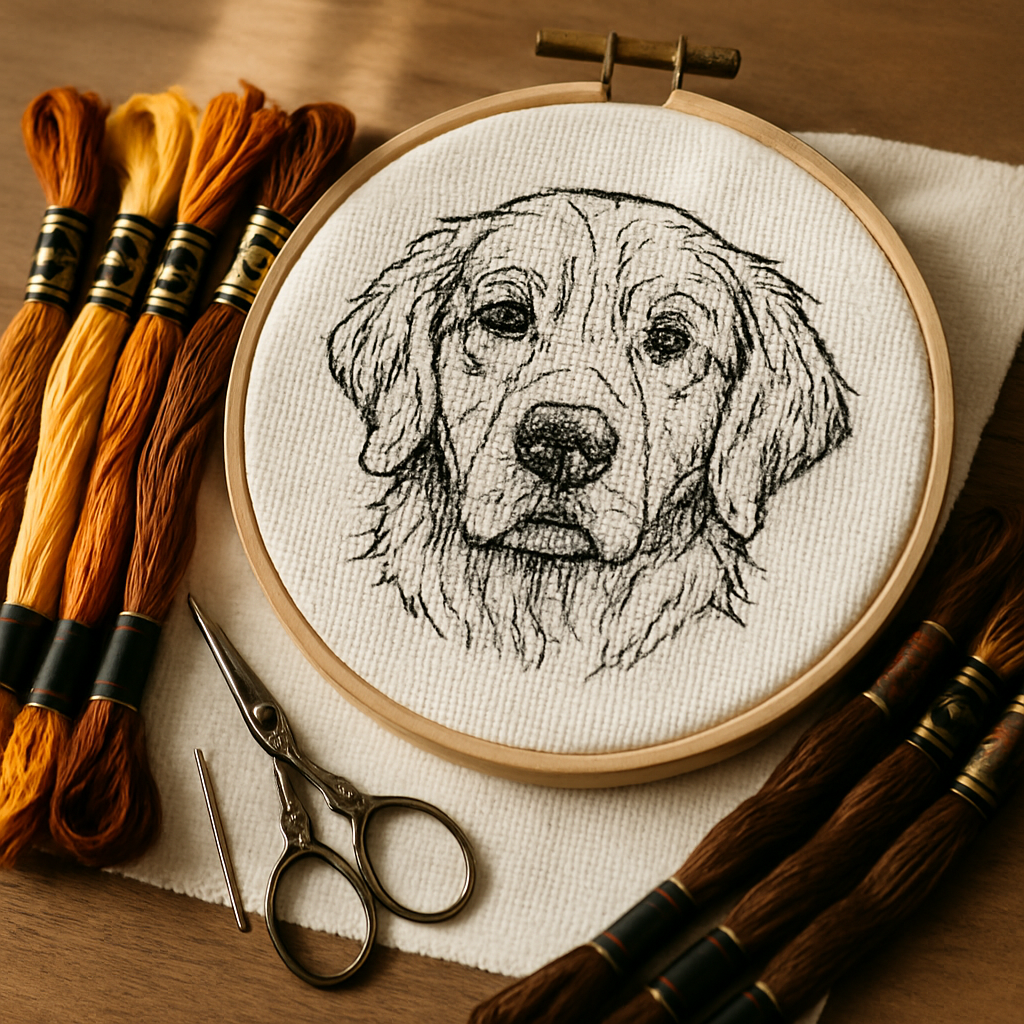 Here's the trap. You can hand-convert a photo to a pattern and get a great result — once. But a commission business needs you to do it reliably, on photos you didn't take, with fur and eyes and markings that have to look like that specific animal, on a turnaround that leaves you a margin. Do it manually and every order is a fresh six-hour gamble.
This is exactly where a production tool earns its keep. The goal isn't to remove the craft — it's to remove the grind so your time goes into client relationships and quality control instead of charting pixels by hand.
The StitchThis commission pipeline, start to finish
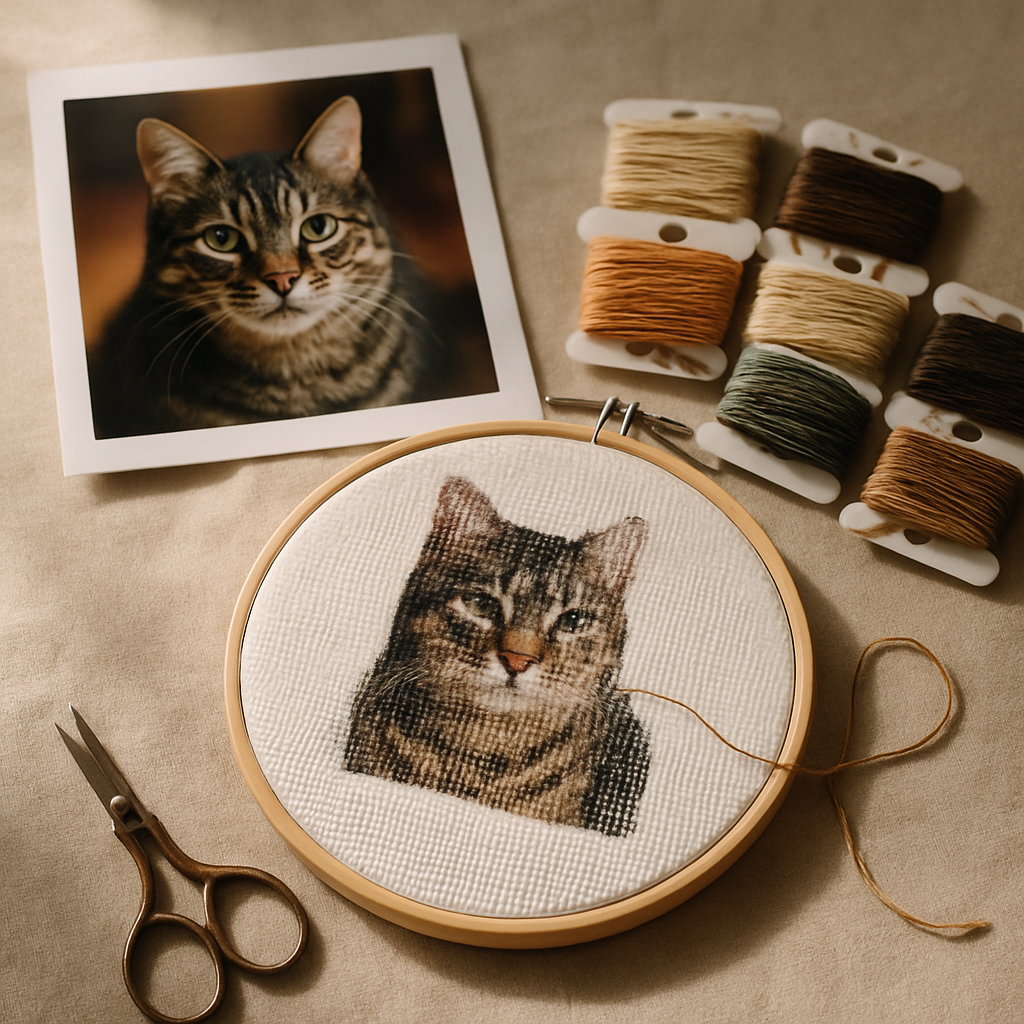 The reason StitchThis fits a commission business is that the entire workflow lives in one place: intake the photo, produce the pattern, generate and compare options, refine, and export the deliverable — without bouncing between five apps. Here's the whole pipeline.
1. Intake: get a usable photo from the client
Your pattern can only be as good as what the client sends, so make your intake idiot-proof. Give every client a short shot list: good even light, the pet's face clear and large in frame, eyes sharp, minimal busy background. Share our pet-photography guide as your "how to send me a photo" link — it does the educating for you and cuts your back-and-forth dramatically.
2. Convert with StitchSense — the make-or-break step
For a pet portrait, the entire commission lives or dies on the face. Markings, the shape of the eyes, the set of the ears — get those wrong and the client politely says "it's lovely" and never orders again. StitchThis's StitchSense preserves the detail in the focal point of the image, so the features that make the pet recognizable stay sharp when the pattern is charted. That faithfulness is the product you're actually selling.
And to be unambiguous, because clients and the wider community are wary of AI fakery: the tools clean and prepare the client's source photo; the pattern is charted faithfully from it, stitch for stitch. You deliver a real, countable chart — never a fake "finished" render. (We explain that distinction in free cross-stitch patterns from your own photos.)
3. Generate options and scale with FORGE
This is the piece that turns "I make patterns" into "I run a studio." FORGE is StitchThis's Studio-tier batch workflow: from a single image it generates multiple pattern variations — different palettes and color treatments — and auto-scores them, so instead of guessing, you're choosing the best version from a set the tool already ranked. Present two or three strong options to a client and watch your approval rate climb.
It scales the other direction too. FORGE can take a ZIP of images and batch-process them — so a five-pet family order, or your whole week's queue, runs as one job instead of five separate manual sessions. That batching is the difference between commissions being a side hustle and a sustainable business.
4. Refine the palette and the details
Once you've picked a direction, tune it. Choose the floss your client (or you) will actually stitch from using multi-brand palettes — DMC, Anchor, Cosmo, Gamma, Madeira, and Metro — so the chart matches real, buyable thread. Use the pattern editor to clean up any stray stitches, adjust a color, or place a small name banner with the pet's name. Then run a quick proof: stitching a tricky patch yourself before delivery is the same discipline we cover in the designer's guide to pattern testing.
5. Deliver a professional PDF
Clients judge you by the file they receive. StitchThis exports a clean PDF — a clear chart with a proper floss legend — that looks like it came from a real studio, not a screenshot. A polished deliverable justifies your price and earns the referral; our pattern PDF best practices guide covers what a professional file should include.
Why a commission studio runs on StitchThis: StitchSense keeps the pet faithful, FORGE generates and auto-scores options and batches whole orders, multi-brand palettes match real floss, the pattern editor perfects the details, and a clean PDF is the deliverable — all in one tool, with a Studio commercial license that lets you sell what you make. Start free →
What you can actually sell — and the license that lets you
Decide what the client is buying:
- The pattern (chart + PDF). Lowest effort, infinitely repeatable, best margins. This is where most commission businesses make their money.
- A finished, stitched piece. Commands far more — often hundreds of dollars — but it's your hours doing the stitching, so price for the time.
- Both, as tiers. Offer the chart at one price and a finished piece at a premium.
The thing that makes any of this legitimate is licensing. StitchThis Studio includes a commercial license, so the patterns you produce are yours to sell — plus analytics to see what's working. If you're fuzzy on the legal side of selling patterns made from client photos, that's worth its own read: cross-stitch pattern watermarking and licensing.
Pricing your commissions
There's no universal number, but here's a sane framework:
- Start from your time, not a competitor's listing. A custom chart is real design work — intake, production, revisions, delivery. Price it like a service.
- Charge for the custom, not the chart. Stock charts compete at $5–15. A custom pet portrait is a different product; clients expect to pay more for "my dog," and underpricing it actually reads as lower quality.
- Build revisions into the price. Offer one or two rounds, then charge for more. It protects your margin from the client who keeps tweaking.
- Tier it. Chart-only, chart + finished piece, rush turnaround. Tiers raise your average order value.
A deeper pricing breakdown is coming in our dedicated cross-stitch pattern pricing guide — but the headline is: price the custom, and don't anchor to commodity charts.
Getting clients (and keeping them)
Production quality gets you referrals; visibility gets you the first orders. The short version: show finished work constantly (process videos of fur coming together do numbers), niche down where it helps (a specific breed, memorial work), and make ordering frictionless with a clear intake. Building a recognizable shop and brand is its own topic — we go deep on it in how to sell cross-stitch patterns on Etsy. The flywheel is simple: a faithful pattern → a thrilled client → a referral to the next pet.
Frequently asked questions
Is selling pet portrait cross-stitch commissions actually profitable? It can be, if you fix the production bottleneck. The margins live in selling the pattern (which is repeatable) and in not spending unpaid hours hand-charting. Tools that batch and score your options are what make the time math work.
How do I make the pattern actually look like the pet? The face is everything. Start from a clear, well-lit photo and use StitchSense to keep the focal detail — eyes, markings, ear shape — faithful when the pattern is charted.
Can I process several commissions at once? Yes. FORGE can batch-process a ZIP of images and auto-score the variations, so a multi-pet order or a full queue runs as one job instead of many manual sessions.
Am I allowed to sell patterns I make from client photos? You need a commercial license to sell patterns, which StitchThis Studio includes. Licensing of the underlying photo is a separate consideration worth understanding before you scale.
What should I charge? Price the custom work as a service based on your time, not a stock-chart price. Tier it — chart-only, finished piece, rush — to raise your average order.
Do I deliver a printout or a file? A clean PDF with a clear chart and floss legend is the professional standard. StitchThis exports one directly.
Turn pet photos into a real commission business
The demand is already there — every dog, every cat, every "I wish I had something of her." What separates a hobby from a studio is a production pipeline that turns client photos into faithful patterns quickly and consistently. StitchThis gives you that pipeline end to end: StitchSense for the likeness, FORGE for options and volume, multi-brand palettes and the editor for the finish, a clean PDF to deliver, and a Studio commercial license to sell it all.
Try StitchThis free to build your first commission pattern, and upgrade to Studio when you're ready to take orders.
Ready to turn your photo into a cross-stitch pattern?
Try StitchThis freeTwo patterns per month. No card required.