| Tracing (light box or window) | Light, thin fabrics: cotton, linen, quilting cotton | A light source, tape, a fabric marking pen | Doesn’t work on dark or thick fabric; tape both layers so nothing shifts |
|---|
| Water-soluble pen | Light fabrics you can rinse | A water-soluble marking pen | Marks can fade with humidity before you finish; ironing can set them |
|---|
| Heat-erasable pen | Light fabrics you’d rather not wet | A heat-erasable pen, an iron | Marks can reappear in the cold; test on scrap first |
|---|
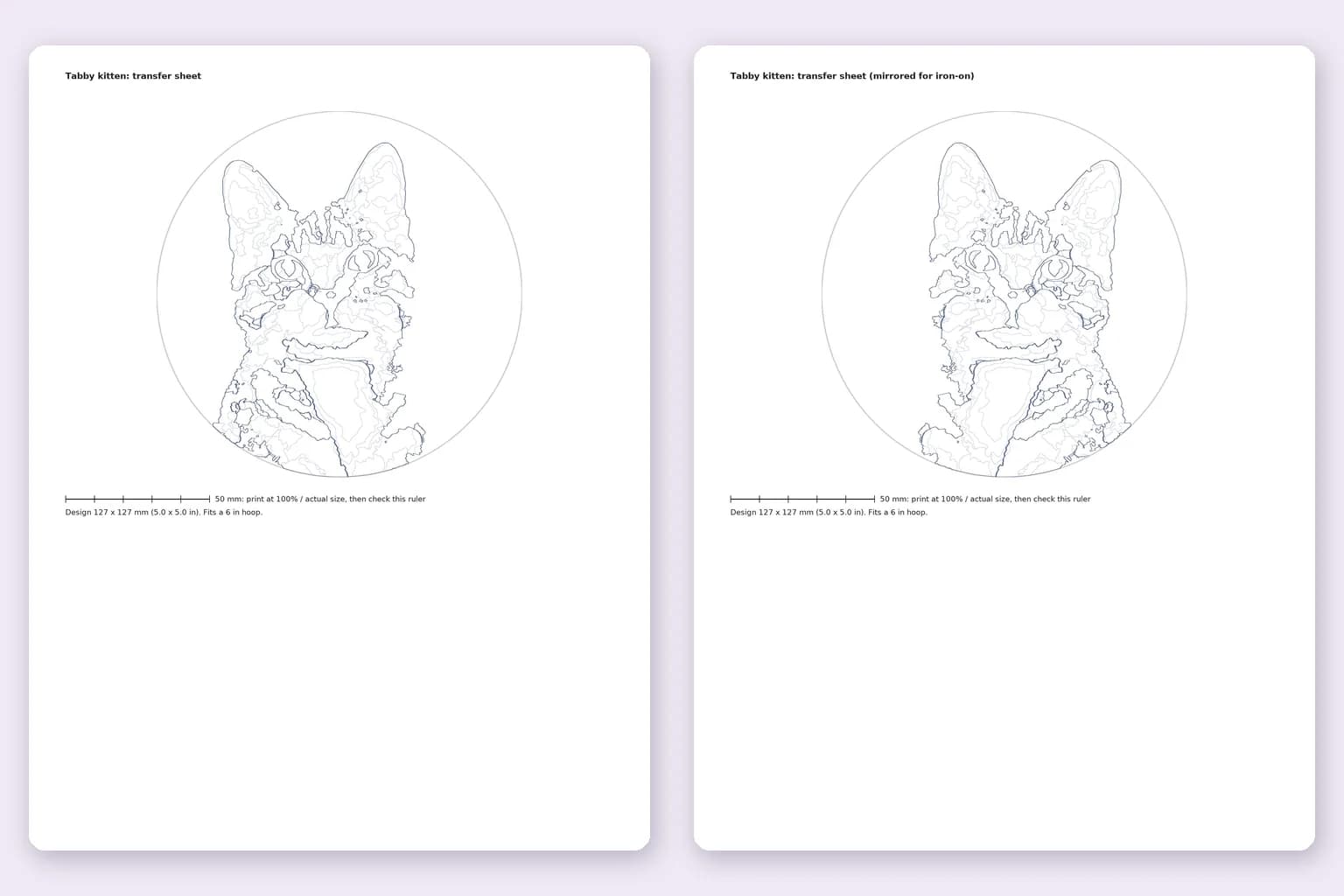
| Iron-on transfer pen or pencil | Repeating a design; fabrics you can’t see through | A transfer pen or pencil, a mirrored copy of the design, an iron | Lines are usually permanent, so stitching must cover them |
|---|
| Carbon / dressmaker’s paper | Medium and dark fabrics (with light-colored paper) | Transfer paper, a stylus or dry ballpoint | Lines can smudge as you stitch; press firmly but evenly |
|---|
| Water-soluble stabilizer (stick-and-stitch) | Dark, stretchy or textured fabric, and clothing | Printable or traceable stabilizer sheets | Rinse thoroughly afterward; some fabrics and threads shouldn’t be soaked |
|---|
| Printable fabric | Light designs where printed lines will be covered | Printer fabric sheets, an inkjet printer | Printed lines may not wash out; size of the sheet limits the design |
|---|