The Best Free Cross-Stitch Patterns (Honestly)
An honest guide to the best free cross-stitch patterns: where to actually find good ones, how to spot bad freebies, and the one free source you control entirely.
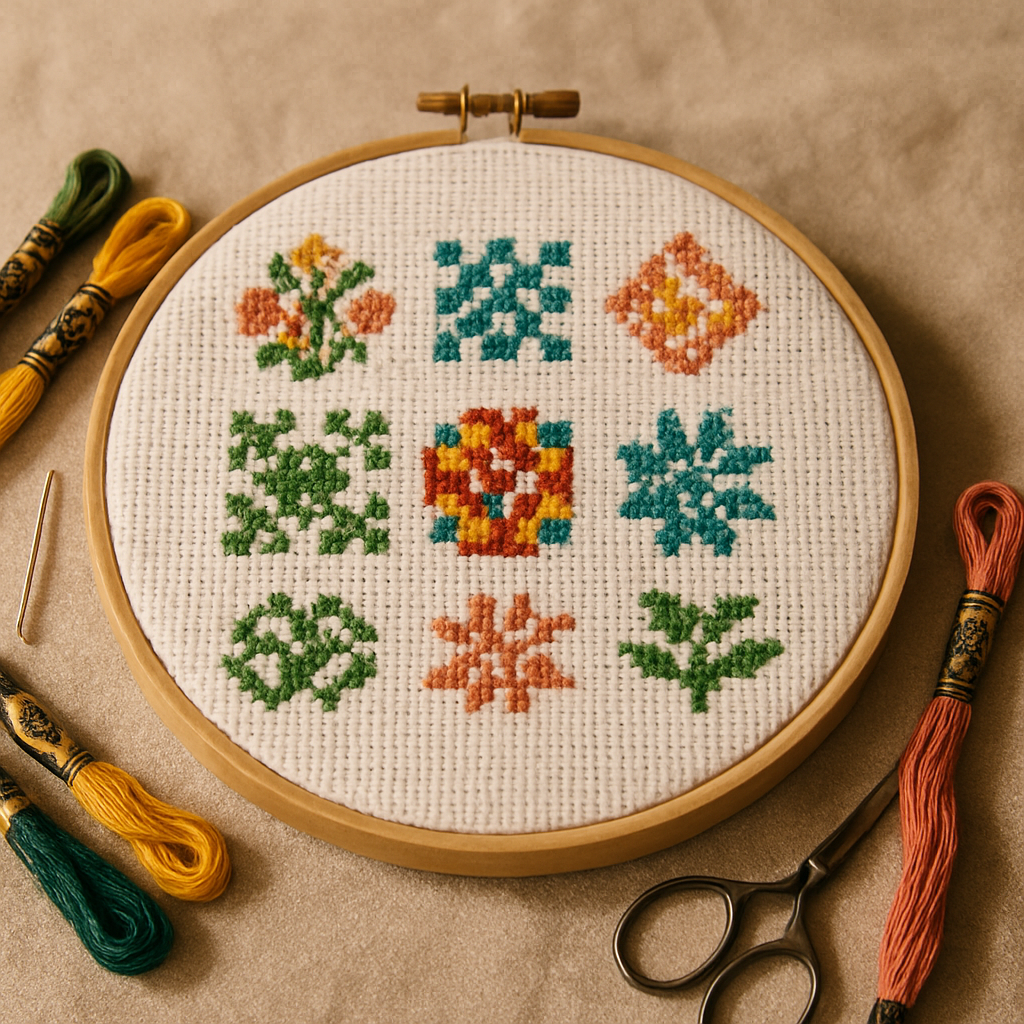
Type "free cross-stitch patterns" into Google and you'll drown in listicles — 50 sites! 100 freebies! 1,000 designs! — almost none of which tell you the thing that actually matters: most free patterns aren't worth stitching.
That's not snobbery. It's eight hours of your evenings on the line. A free chart that's low-resolution, mislabeled, or jammed with single-stitch "confetti" will cost you far more in frustration than a good pattern ever would in dollars. So let's do this honestly. Here's where the genuinely good free patterns live, how to spot the duds before you commit a single stitch, and the one free source that quietly beats almost all of them — because you control it completely.
First, the honest part: "free" has two hidden costs
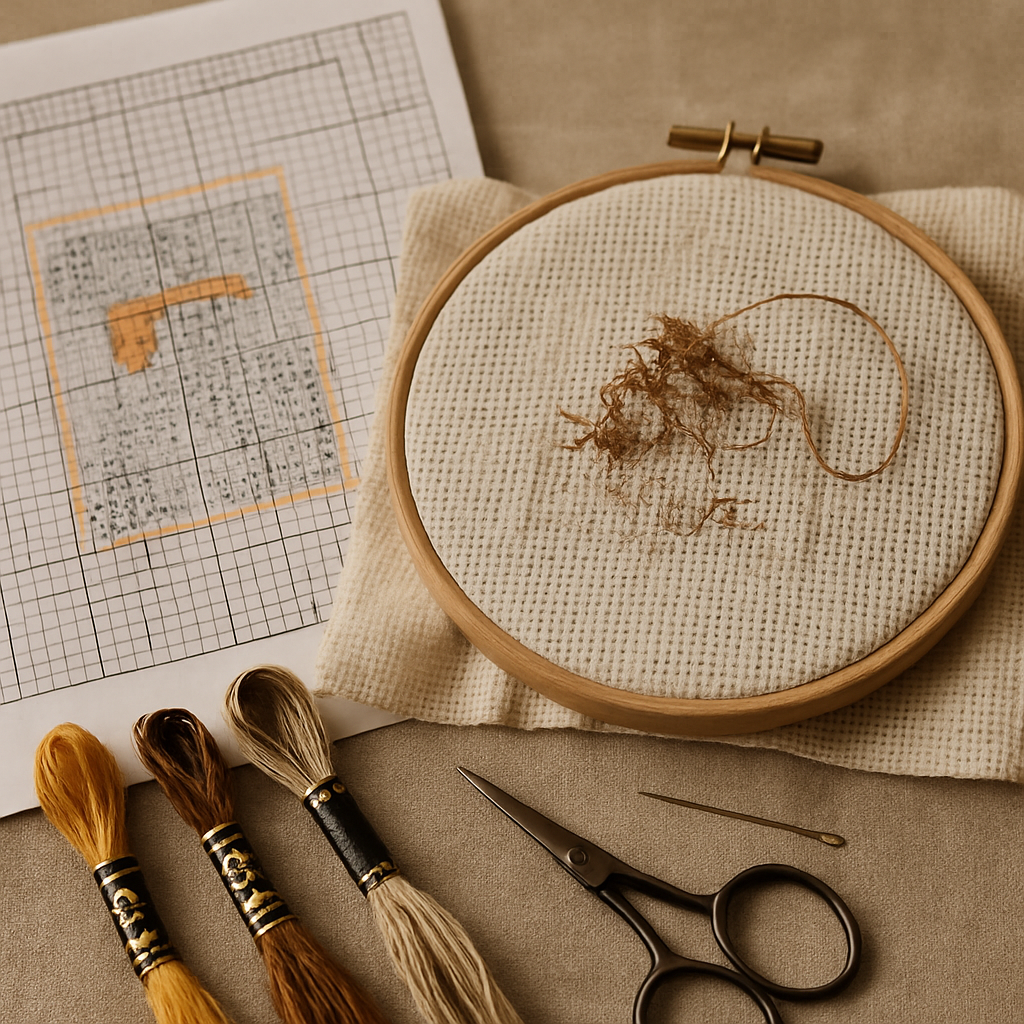 A free pattern is never only free. There are two prices you might still pay, and the listicles never mention either.
1. The quality cost. Free patterns are wildly uneven. Some are beautifully charted by generous designers. Many are auto-generated from a photo by a tool that dumped every pixel into its own color, producing a chart that's technically accurate and practically miserable. You don't find out which kind you grabbed until you're three colors deep.
2. The licensing cost. "Free to download" and "free to do anything with" are different things. Plenty of free charts are free for personal use only — you can't sell the finished piece, and you certainly can't resell the pattern. Vintage and public-domain charts are safer ground, but modern freebies often come with strings. If you ever plan to sell what you make, this matters.
Keep both costs in mind and the whole landscape gets clearer. Now let's map it.
The honest map of free cross-stitch pattern sources
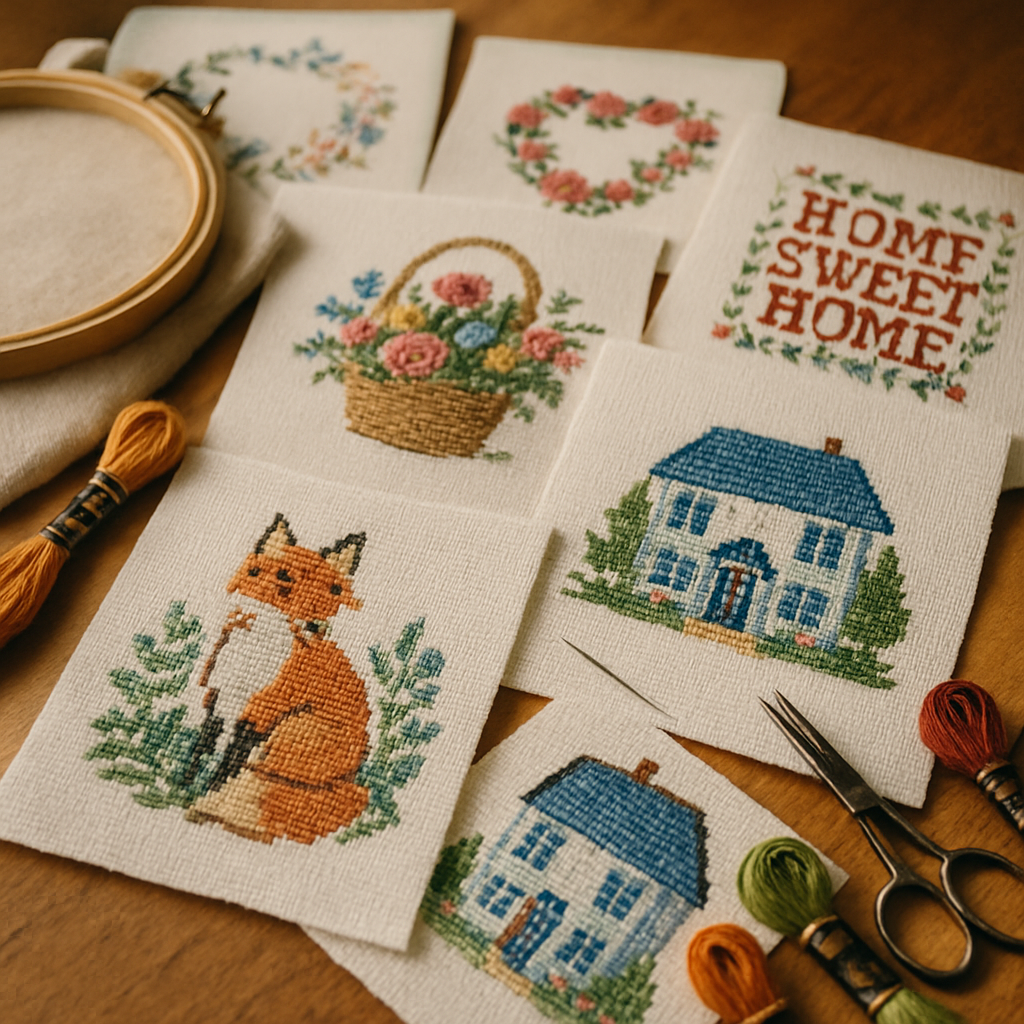
1. Designer freebies and brand libraries
Thread brands and individual designers regularly release free charts as a goodwill gesture (and a hook into their paid catalog). DMC's free pattern library is the best-known; many independent designers post a free design or two on their blogs and newsletters.
- Best for: Polished, tested, small-to-medium designs — samplers, motifs, seasonal pieces.
- The catch: Selection is limited and themed around whatever the brand wants to promote. You take what's offered, not what you want.
2. Public-domain and vintage charts
Out-of-copyright Victorian and mid-century charts, antique sampler reproductions, and pattern-darning grids are a goldmine — genuinely free, genuinely yours to use, often gorgeous.
- Best for: Traditional motifs, blackwork, historical samplers, alphabets.
- The catch: Old charts use old conventions and faded symbols. You may have to re-key floss colors yourself and squint through a low-quality scan. (Our forthcoming guide to reading a cross-stitch pattern covers how to decode an unfamiliar chart.)
3. Free community swaps and forums
Facebook groups, Reddit's r/CrossStitch, and long-running stitching forums share freebies constantly, including charts members made themselves.
- Best for: Niche subjects, fandom designs, and friendly advice attached.
- The catch: Quality and licensing are a coin flip. Always ask whether a shared chart is the sharer's to give.
4. Free pattern generators (photo → pattern)
This is the big one, and the most misunderstood. A pattern generator turns a photo you upload into a cross-stitch chart. Free ones exist, and they're tempting — your dog, your kid, your wedding bouquet, charted for nothing.
- Best for: Custom subjects no library will ever carry. The subject is yours, so the licensing cost basically vanishes.
- The catch: This is where the quality cost bites hardest. Most free generators do a naive pixel-by-pixel conversion with no judgment about what matters in the image. The result is the dreaded confetti chart. More on that below — because it's also where the right free tool pulls ahead.
Quick comparison
| Free source | Quality | You control the subject? | Safe to sell finished piece? |
|---|---|---|---|
| Designer / brand freebies | High, but limited selection | No | Usually personal-use only |
| Public domain / vintage | Variable scans, great motifs | No | Yes (if truly public domain) |
| Community swaps | Coin flip | Sometimes | Risky — verify first |
| Naive photo generators | Often poor (confetti) | Yes | Depends on the tool's terms |
| Detail-aware photo tool (StitchThis free tier) | High, stitchable | Yes | Yes (free-tier personal use) |
Why most free photo generators disappoint — and what good looks like
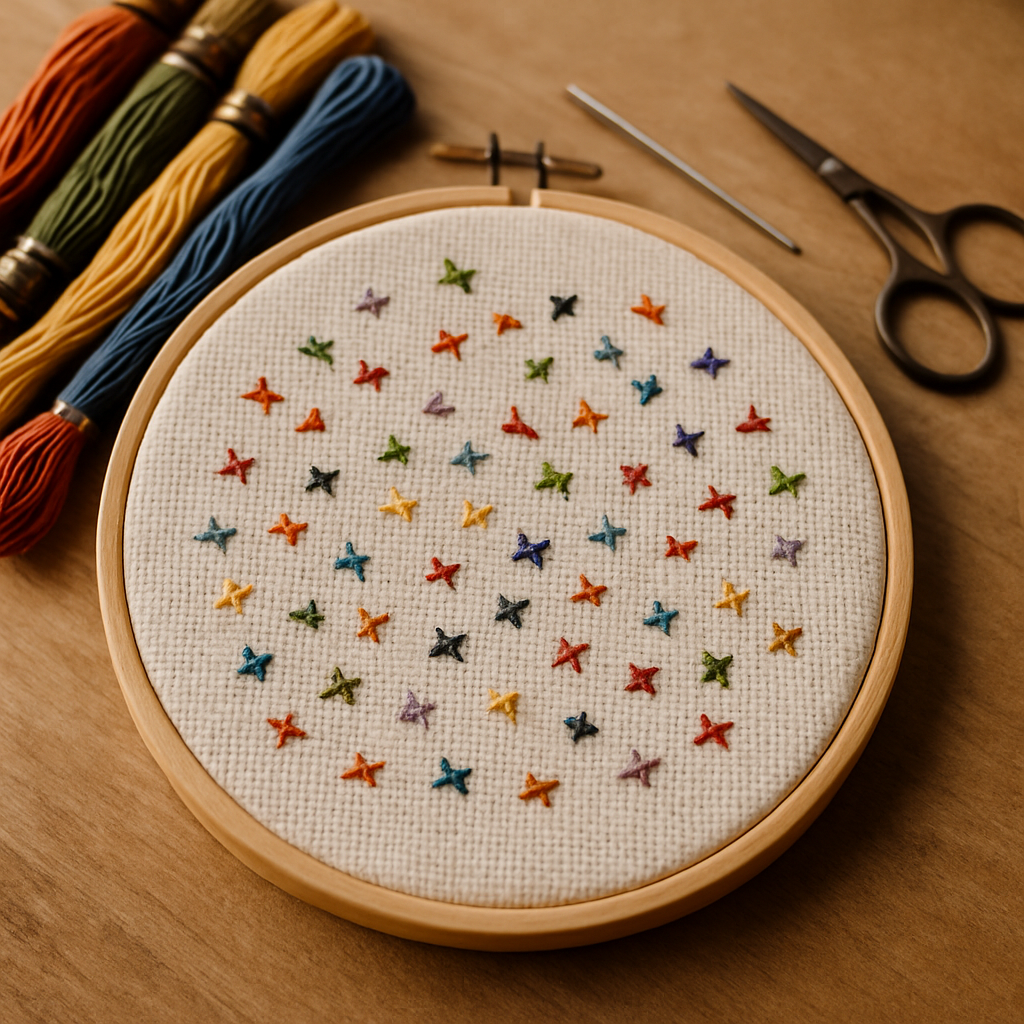 Here's the part the listicles skip. When a cheap generator converts a photo, it treats every pixel equally. A slightly different shade in the background becomes its own floss color. The result is a chart speckled with thousands of isolated single stitches — confetti — that's brutal to stitch and looks muddy when finished. (We go deep on this in why some patterns feel miserable to stitch.)
A good conversion produces the opposite outcome: the focal subject — the face, the eyes, what you actually photographed — stays sharp and recognizable, and the busy, unimportant areas calm down instead of exploding into noise. That single difference is what separates a free pattern you'll abandon from one you'll frame.
This is exactly where StitchThis earns its place on an honest list. You can turn your own photo into a clean, stitchable pattern on the free tier. The difference is StitchSense: it keeps detail sharp where it matters and quiets the confetti everywhere else, so a free pattern from your photo actually reads as the thing you photographed.
The free generator test Before you trust any free photo-to-pattern tool, run one image through it and look at two things: (1) Is the face/focal point still recognizable, or has it dissolved into specks? (2) Roughly how many colors, and how many of them appear as lone single stitches? If the answer is "unrecognizable" and "hundreds of one-offs," that free pattern will cost you dearly in hours. Try the same photo on StitchThis free and compare.
And because you uploaded your own photo, the subject is yours — no licensing headache, unlike a random freebie of someone else's artwork.
How to vet any free pattern before you stitch it
Whatever source you use, run a free chart through this checklist before you cut fabric. Three minutes here saves three weeks of regret.
Free pattern vetting checklist
- Resolution: Can you read every symbol clearly when printed? Blurry scans are a no.
- Floss key: Does it list actual thread numbers (DMC/Anchor) or just vague color names? "Light blue" is not a floss.
- Stitch count + finished size: Is the size given for your fabric count? (If not, see our Aida 14 vs 16 vs 18 guide to work it out.)
- Confetti load: Skim for big regions of single, isolated stitches. A few are fine; a blizzard is a warning.
- Symbol clarity: Are similar colors given distinct symbols, or will you mix up two near-identical greys at 9pm?
- Licensing: Personal use only, or free to sell the finished piece? Know before you start.
A pattern that passes all six is a keeper, free or not.
When "free" stops making sense
Free is perfect for learning, for small motifs, and for trying the craft without spending a cent. But there's a point where chasing free costs more than it saves:
- You want a specific custom subject (your pet, a portrait, a wedding photo). No free library has it, and a naive free generator will mangle it. A detail-aware tool's free tier is the honest sweet spot here.
- You're stitching for someone you love. The hours matter more than the dollars. A clean, well-charted pattern is worth it.
- You want to sell. The moment money is involved, licensing and chart quality stop being optional. (If that's you, our forthcoming guides to selling on Etsy and pattern pricing are built for exactly this.)
The honest answer isn't "free bad, paid good." It's match the source to the stakes. Low stakes? Grab a great freebie. High stakes, custom subject? Make it yourself.
The best free pattern is the one you control
If we're being honest — and that was the whole point — the single most reliable free pattern isn't a download at all. It's the one you make from a photo you took, of a subject you chose, with the rights already in your pocket and the detail kept where it counts.
That's why StitchThis belongs at the top of an honest free list, not the bottom. You can build a pattern free from your own photo — with multi-brand floss palettes (DMC, Anchor, Cosmo, Gamma, Madeira, Metro), built-in image tools to clean up the source photo before it's charted, and a clean PDF export when you're done. No confetti lottery, no licensing guesswork, no mystery scans.
Frequently asked questions
Are free cross-stitch patterns any good? Some are excellent, many are not. Designer freebies and true public-domain charts can be wonderful. The weak link is usually auto-generated photo patterns from naive tools, which produce confetti-heavy charts that are hard to stitch and muddy when finished. Vet every free pattern before you start.
Where can I find free cross-stitch patterns from my own photos? You can create patterns from your photos free on StitchThis. Because it preserves detail where it matters and reduces confetti, a free pattern from your photo actually looks like your photo. See our walkthrough on free patterns from your own photos.
Can I sell something I stitched from a free pattern? Sometimes. Many free patterns are licensed for personal use only, which means you can stitch them for yourself but not sell the finished piece or the chart. Public-domain charts and patterns you make from your own photos are the safest for selling. Always check the terms.
Why do free photo-to-pattern generators look so bad? Most convert every pixel into its own color with no judgment about what's important, so faces dissolve and backgrounds explode into single stitches. A detail-aware tool spends color where your eye looks and calms the rest — the difference between a free pattern you abandon and one you frame.
What's the catch with totally free patterns? Two catches: quality (uneven, sometimes unstitchable) and licensing (often personal-use only). Neither is a dealbreaker — just know which you're accepting before you invest the hours.
The honest bottom line
Free cross-stitch patterns are absolutely worth using — you just have to be choosy. Use designer freebies and public-domain charts for motifs and traditional designs. Vet every download with the six-point checklist. And when you want a custom subject done right, skip the confetti lottery and make it yourself.
You can start free on StitchThis right now — From pattern creation through floss tracking to in-browser viewing and editing — plus a community of stitchers around it — StitchThis is the whole pipeline in one place. no AI in the stitching, just a clean chart faithfully made from your photo. That's the most honest "free" we know how to offer. Try StitchThis free →
Where StitchThis fits this workflow
The floss problem only gets harder as your stash grows, which is why StitchThis is built around it from both ends. The floss stash tracker holds your inventory — import it once via CSV upload (from any spreadsheet you already keep) or by uploading a photo of your skein organiser, and the tracker identifies every colour in seconds rather than the afternoon of typing that usually kills digital stash tools. From there every pattern's legend filters against what you own: the shopping list shows only the gaps.
The legend itself renders in any of six floss brands — DMC, Anchor, Cosmo, Gamma, Madeira, or Metro — so the pattern arrives in the brand you actually have, not the brand the original designer chose. StitchSense preserves focal detail (faces, eyes, important subjects) on photo-based patterns while simplifying the busier areas that produce confetti, and the in-browser viewer doubles as a chart editor — tap each stitch to track progress, paint or fill new stitches with the editor tools, swap one colour for another across the chart, or fine-tune any cell before you put needle to fabric. Studio-tier users add FORGE batch generation for producing several variations from one source. All of it exports to a clean PDF when you're ready to print or sell. From pattern creation through floss tracking to in-browser viewing and editing — plus a community of stitchers around it — StitchThis is the whole pipeline in one place. — enough to load your stash and run the pipeline end to end on a real project.
Try StitchThis free to set up the stash side as you go.
Related reading on StitchThis:
Ready to turn your photo into a cross-stitch pattern?
Try StitchThis freeTwo patterns per month. No card required.