The Designer's Guide to Cross-Stitch Pattern Testing
Learn how to test a cross-stitch pattern before you sell it — recruiting testers, running the test, separating real bugs from preferences, and shipping clean.
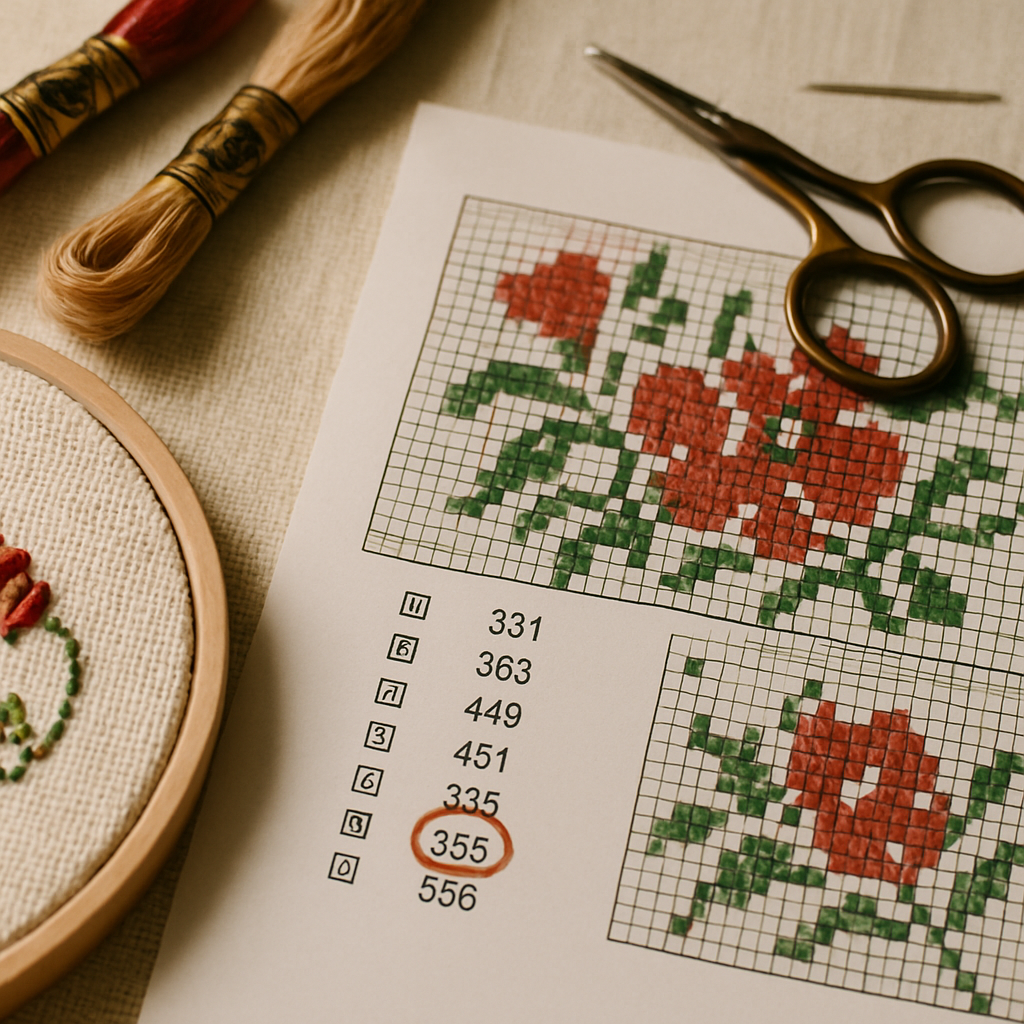
The first pattern I ever sold had a typo in the floss list. Not a big one — a single DMC number off by a digit. But it sent a stitcher to the craft store for a color that didn't belong in the design, and the review she left made sure everyone knew it. One wrong digit, one star.
That's the thing nobody tells you when you start selling patterns: the gap between "this chart looks finished" and "this chart works in someone else's hands" is wider than it looks. Pattern testing is how you close it.
This guide walks through testing the way a working designer actually does it — how to build a chart that's easy to test in the first place, where to find testers who won't ghost you, what to put in front of them, and how to tell the difference between feedback that saves your pattern and feedback that's just personal taste. If you sell patterns, or you're about to, this is the step that protects everything else you've built.
What pattern testing actually is (and what it isn't)
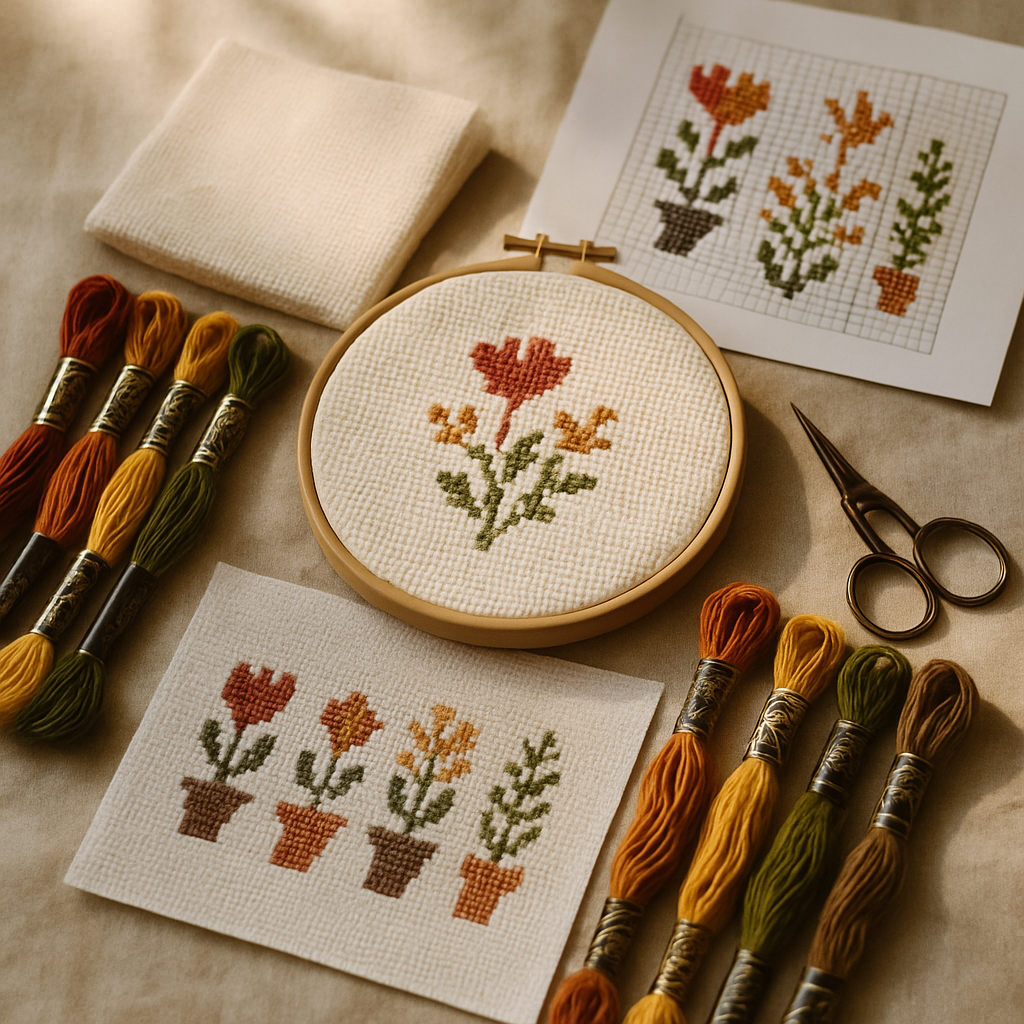 People use "testing" to mean two different jobs, and conflating them is why so many tests miss obvious errors.
Proofing asks: does the document work? Do the stitch counts on the chart match the cover? Is every symbol in the legend? Is the floss list accurate and complete? Does the finished-size math hold up on the recommended fabric count? Proofing is the spreadsheet side of the job, and a sharp proofreader can do it without stitching a single X.
Stitch-testing asks: is this actually pleasant and unambiguous to stitch? Can a tester tell two pale symbols apart under normal lamplight? Does a region of confetti make a section maddening? Is the focal point — the dog's eyes, the bride's face — crisp, or did it dissolve into single scattered stitches? You only learn this by putting needle to fabric.
A real test covers both. Most weak tests are pure proofing dressed up as stitch-testing — someone skims the chart, says "looks great!", and you find out about the symbol collision after release.
What testing can't fix
Testing is a proof, not a rescue. If the underlying chart is built badly — a portrait simplified into mush, a sky shattered into forty near-identical blues — no amount of tester goodwill will save it. They'll either grind through it resentfully or quietly bow out. The most efficient testing happens on patterns that were stitchable before testing started, which is why the prep work below matters as much as the test itself. (If you're not sure whether a design sits on the friendly or punishing end of that range, our piece on the stitchability spectrum is a good gut-check.)
Why testing matters more than you think
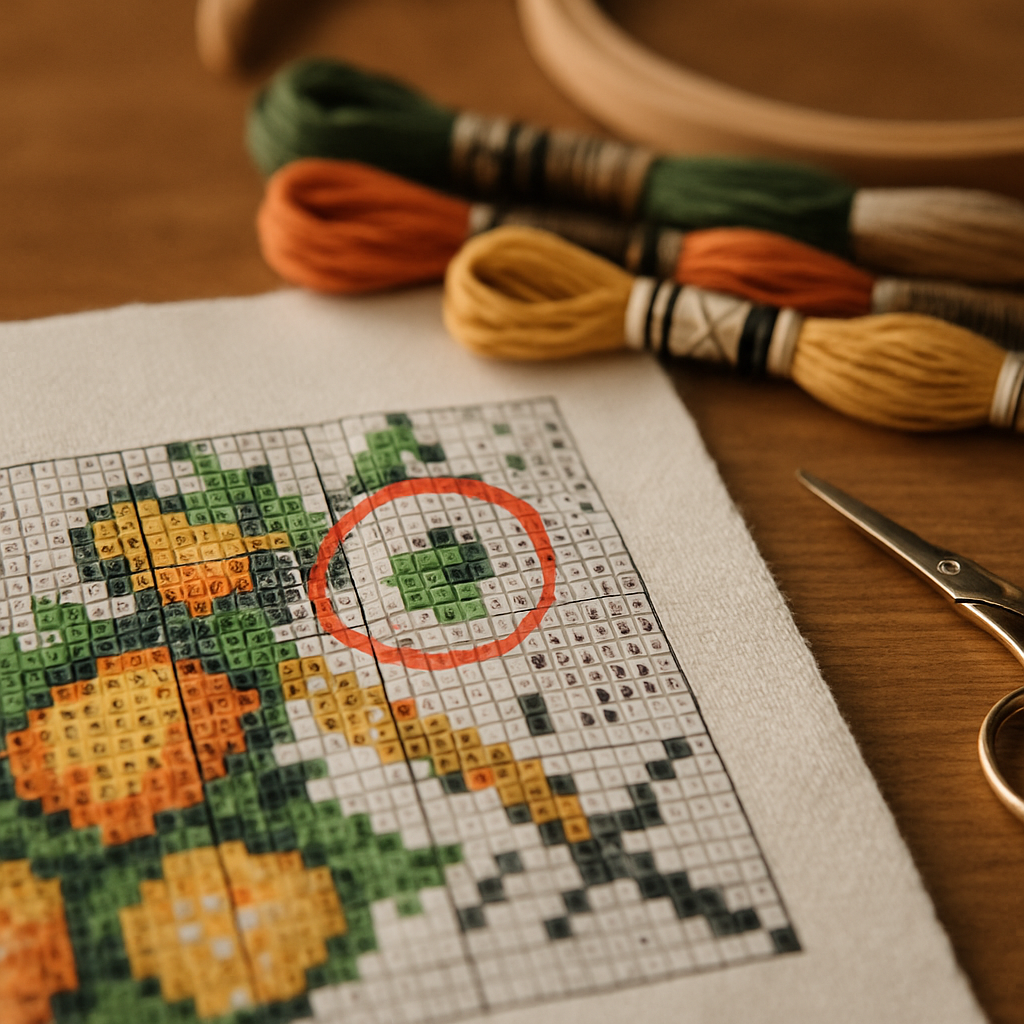 Selling patterns is a reputation business. On Etsy, your first dozen reviews set the trajectory for everything after — and stitchers are unusually detailed reviewers. They'll photograph the exact symbol that tripped them up. A miscount, a missing backstitch color, an ambiguous legend: each one is a public, permanent dent.
Testing also buys you something quieter and more valuable: confidence. When you know three experienced stitchers worked your chart cover to cover and the only notes were "loved it" and "maybe bump symbol 14's contrast," you can price the pattern like you mean it and answer customer questions without flinching. That confidence is hard to fake and customers can feel its absence.
If selling is the goal, treat testing as part of the product, not an optional courtesy. Our guide to selling cross-stitch patterns on Etsy goes deeper on the listing side, and our pattern PDF best practices covers the file you'll actually ship; this is the step that happens before you ever hit publish.
Before you recruit a single tester
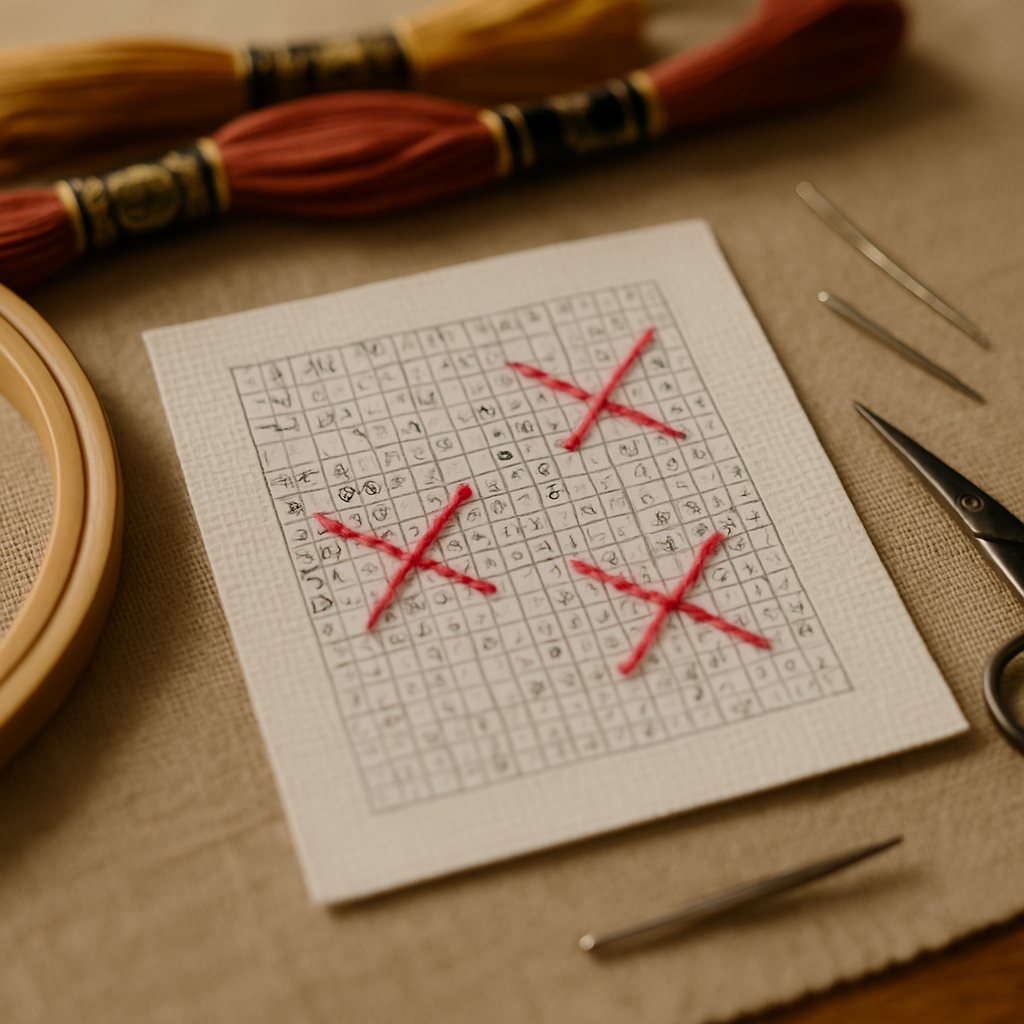 The best way to make testing easy is to hand testers a chart that's already close to right. Every error you remove in advance is an error a tester doesn't have to find, document, and wait for you to fix.
The stitchability head start
A huge share of "bad pattern" feedback isn't about typos — it's about the experience. Endless confetti, a muddy focal point, symbols that blur together. These problems start at chart creation, not at testing.
This is where your build tools earn their keep. When you generate a pattern in StitchThis, StitchSense varies how aggressively different areas are simplified — holding detail where the eye lands (a face, a focal subject) while calming busy backgrounds — so you start from a chart with less of the confetti that drives testers up the wall. If you want options, FORGE produces several scored variations from one source photo in a single run, so you can pick the most stitchable base before anyone tests it rather than committing to the first result. (New to why confetti is such a problem? Start with what confetti is and why some patterns look bad.)
None of this replaces testing. It just means your testers spend their effort confirming a good chart instead of triaging a rough one — which is exactly the workflow StitchThis is built around: generate a stitchable chart, hand it to testers, fix fast, ship.
Try it on your next release. You can build, edit, and re-export patterns on StitchThis free Start your next design free →
Get the floss list right the first time
The single most common proofing error is a wrong or missing floss code — the exact mistake that cost me a star. If you design across brands, accuracy gets harder, because a DMC-to-Anchor conversion is approximate, not absolute. Building your palette in a tool that handles multiple floss brands natively — DMC, Anchor, Cosmo, Gamma, Madeira, Metro — keeps your list tied to real, named colors instead of hand-typed codes you might fat-finger. Then proof it anyway. Floss lists deserve their own dedicated pass.
How to find and choose pattern testers
Where to find them
- Dedicated tester groups. Facebook has active "cross stitch pattern testers" groups built for exactly this. Post your call with a preview image, fabric/floss requirements, and a deadline.
- Your own audience. If you have any following — Instagram, a stitch-along group, a newsletter — your existing stitchers are your best testers. They already like your style and are invested in your success.
- Reciprocal designer networks. Other small designers will often test for you if you test for them. These are some of the most thorough testers you'll find, because they read charts professionally.
How many you actually need
More is not better. Coordinating a dozen testers is a part-time job, and most will tell you the same three things. For a typical small-to-mid pattern, two to four committed testers is the sweet spot. Bigger or more complex designs (large portraits, sprawling samplers) justify more, partly because you can split sections among them.
| Pattern type | Suggested testers | Why |
|---|---|---|
| Small / simple (mini, ornament, bookmark) | 1–2 | Low surface area for errors |
| Standard (most patterns) | 2–4 | Balances coverage with coordination |
| Large / complex (portraits, samplers) | 3–6 | More to check; split sections |
Vetting and red flags
A free pattern attracts people who want a free pattern, not people who want to test. Vet lightly but deliberately.
Red flags when vetting testers
- No finished work to show, ever — you need someone who completes projects.
- Pushes back on the deadline before starting.
- Wants the file but goes quiet on what feedback you actually need.
- Has a history of starting tests and disappearing (the groups know who these people are — ask).
A good tester finishes things, communicates, and can articulate why something didn't work, not just that they didn't like it.
Setting up the test
This is the part most designers skip, and it's the part that determines whether you get useful feedback or a thumbs-up emoji.
The Test Packet — what to send every tester
- The full chart (clearly marked TEST COPY — DO NOT SHARE)
- The complete floss list with brand and codes
- Fabric count, finished size, and stitch count
- A clear photo of the intended finished result
- The specific things you want checked (symbol clarity? a tricky border? the floss list?)
- Your deadline and how to send feedback (shared doc, group thread, DM)
- A thank-you and what they get (the final pattern, credit, etc.)
Spell out what you want. "Let me know what you think" gets you nothing. "Please flag any symbols that are hard to distinguish, double-check the floss list against what you actually used, and tell me if any section felt tedious" gets you a real report.
Timelines and expectations
Be realistic. Stitchers have day jobs and other WIPs. A small pattern might take two weeks; a large one, a month or more. Set a deadline, then add buffer. Check in once at the midpoint — not to nag, but to catch a ghosting tester early enough to recruit a replacement.
If you want to give testers a head start on materials, point them to a fabric size calculator so they can cut the right Aida or evenweave before they begin.
Etiquette and compensation
Testing is unpaid labor you're asking a stranger to do well. Treat it that way.
Tester etiquette: the unwritten rules
- Testers stitch for free; the least you owe is the finished pattern, a public thank-you, and credit if they want it.
- Don't argue with feedback. You don't have to act on all of it, but you do have to receive it graciously.
- Don't move the goalposts mid-test or pile on "one more thing."
- Respect their time: a clean, well-organized test packet shows you value it.
Some designers offer a small payment or a free pattern of the tester's choice for large projects. There's no fixed standard, but generosity here builds a tester pool that comes back.
The pattern testing checklist
Hand a version of this to every tester, split by job.
| Proofing (document accuracy) | Stitch-testing (the experience) |
|---|---|
| Stitch count matches the cover | Symbols are easy to tell apart in normal light |
| Every symbol appears in the legend | Focal areas (faces, eyes) read clearly when stitched |
| Floss list is complete and codes are correct | No section feels needlessly tedious or confetti-heavy |
| Backstitch/specialty colors are listed | Color choices look right stitched, not just on screen |
| Finished-size math is correct for the stated fabric count | Page breaks/overlaps don't cause counting errors |
| Pages are numbered and the chart is easy to navigate | The pattern is genuinely enjoyable to stitch |
Handling feedback: signal vs. preference
Not all feedback is equal, and treating it as if it were will paralyze you.
Signal is anything objective or repeated: a miscount, a missing legend entry, a wrong floss code, two symbols that multiple testers confused. Fix all of it, no debate.
Preference is one tester's taste: "I'd have used a brighter red," "I don't love this border." Note it, weigh it against your design intent, and feel free to let it go. Your pattern is allowed to have a point of view.
The cleanest way to sort the two: if two or more testers independently flag the same thing, it's almost certainly signal. If one person flags it and others didn't notice, it's probably preference. The community's shared vocabulary helps here too — when testers and designer use the same terms for the same problems, feedback gets sharper.
Turning feedback into a finished pattern
Here's where a lot of designers lose hours: tester feedback comes in, and fixing it means rebuilding the chart in whatever made it, re-checking the legend, and re-exporting — often introducing new errors in the process.
This is the practical reason to keep your chart editable. In StitchThis, you can open a pattern in the in-browser editor — including charts you import as PDF or OXS — adjust the cells, symbols, or colors a tester flagged, and re-export a clean PDF without starting over. A confused symbol becomes a quick swap; a wrong floss code becomes a two-second correction; then you ship a corrected file the same day instead of next week. The faster your fix loop, the more rounds of feedback you can actually act on.
When the corrections are in, do one final full proof yourself — ideally against the same checklist your testers used. Then export the production PDF. (For getting that final file genuinely print-clean — fonts, page breaks, symbol legibility at print size — that's its own craft, and worth a deliberate pass.)
Why designers run their whole test loop on StitchThis Testing is faster when every stage lives in one place. StitchThis gives you:
- StitchSense so your chart starts stitchable — less for testers to flag.
- FORGE to generate and score multiple variations from one photo, so you test the strongest base, not your first attempt.
- Multi-brand floss palettes (DMC, Anchor, Cosmo, Gamma, Madeira, Metro) so your floss list is tied to real colors, not hand-typed codes.
- An in-browser editor that imports PDF/OXS and re-exports clean PDFs, so tester feedback becomes a same-day fix.
- A floss stash tracker so your patterns favor colors stitchers (and you) already own. It's free to start — two patterns a month, up to 200×200 stitches, no card. Build your next pattern free →
A lightweight testing workflow you can reuse
- Build the chart on tools that keep focal detail and limit confetti, so you start stitchable.
- Self-proof against the checklist — especially the floss list.
- Recruit 2–4 vetted testers with a clear call and deadline.
- Send a complete test packet, marked as a test copy, with specific asks.
- Check in at the midpoint to catch ghosting early.
- Triage feedback into signal (fix) and preference (consider).
- Correct in an editable chart and re-export a clean PDF.
- Final proof and release with confidence.
Run it once and it becomes muscle memory. Run it every time and your reviews start doing your marketing for you. For how testing fits into the larger arc of designing and selling, see our cross-stitch pattern-making workflow.
Frequently asked questions
How many testers do I need for a cross-stitch pattern? For most patterns, two to four committed testers is ideal. Small designs can get by with one or two; large portraits and samplers justify more, partly so you can split sections. Quality and follow-through matter far more than headcount.
Should I pay pattern testers? There's no fixed standard. At minimum, testers should receive the finished pattern, public credit, and a sincere thank-you. For large or demanding projects, some designers add a small payment or a free pattern of the tester's choice. Generosity builds a tester pool that returns.
What's the difference between a tester and a proofreader? A proofreader checks that the document is correct — counts, legend, floss list, sizing math — and can do it without stitching. A tester actually stitches (all or part) to confirm the pattern is clear and pleasant to work. Strong tests cover both jobs.
How do I protect my pattern during testing? Mark the file clearly as a test copy that may not be shared, send it only to vetted testers, and keep your tester group small. Watermarking and licensing are a deeper topic worth handling deliberately for paid releases.
How long should pattern testing take? It depends on size: roughly two weeks for a small pattern, a month or more for a large one. Set a deadline, add buffer, and check in at the midpoint.
Can I skip testing if I used good design software? Good software prevents chart errors — clean symbols, accurate counts, a tidy legend. It can't tell you whether a section is tedious to stitch or whether a color reads wrong in thread. Software gets you a strong starting chart; testing confirms the human experience. Use both.
Test like the pattern has your name on it — because it does
Every pattern you release is a small promise: follow this and you'll get the thing on the cover. Testing is how you keep that promise before a stranger pays you to find out you didn't. Build a stitchable chart, hand testers a clean packet, sort signal from preference, and fix fast.
Want a faster build-and-fix loop? You can create and edit patterns on StitchThis free Start your next design on tools built to keep the detail that matters and cut the confetti that doesn't, then edit and re-export clean PDFs the moment your testers report back. Try StitchThis free →
Related reading on StitchThis:
Ready to turn your photo into a cross-stitch pattern?
Try StitchThis freeTwo patterns per month. No card required.